Residents, winter visitors and passage migrants
Costa Rica’s birds fall into three broad groups, and it helps to know which is which before you go out on the water.
- Residents live and breed in Costa Rica all year. In Tamarindo that includes the Brown Pelican, the Tricolored Heron and the Mangrove Swallow.
- Winter visitors breed in the United States and Canada and spend the northern winter here, from about September or October to March or April. Warblers, orioles, tanagers and many shorebirds belong to this group.
- Passage migrants only stop for a few days or weeks on their way to South America and back. You catch them in spring and fall, not in midwinter.
The official list of the birds of Costa Rica, kept by the Costa Rican Ornithological Association (AOCR), had 944 species in its June 2026 update; 222 of them carry the status M (migrant). The Costa Rica Tourism Board estimates that some five million birds migrate through the country every year, most of them at night and so high that you never see them pass.
The lines are not always clean. The same tourism board page notes that young Great Blue Herons and Ospreys may stay in Costa Rica and not fly north until they are old enough to breed. That is why an Osprey over the estuary in June is not a mistake.
Why Guanacaste is a good place to watch it
Costa Rica sits between 8 and 11 degrees north of the equator, and the tourism board describes it as a funnel point for birds that converge from Alaska, the Canadian tundra, the Great Lakes and both coasts of the United States. Mountains and lowlands on two oceans give them many kinds of habitat to land in.
Guanacaste, on the North Pacific, is a coastal region of tropical forest, dry forest and wetlands. Its dry period runs from December to March, when only about 4 % of the year’s rain falls, according to the Visit Costa Rica climate guide for Guanacaste. In other words, the northern winter visitors spend their stay here during the sunniest months of the year.
Tamarindo adds a mix of habitats in a small space. The eBird hotspot sits at the mouth of the estuary and takes in the beach, the mangrove edge and the edge of town. Shorebirds feed on the sand and mud, warblers move through the mangrove and the trees, and swallows hunt over the water. The mangrove itself is a Ramsar wetland of international importance (site 610).
What the Tamarindo data show
eBird draws a weekly bar for each species at the hotspot: no bar means no records that week, and a wider bar means the species was on a larger share of checklists. We counted the species that follow a clear migrant pattern in Tamarindo, with almost no records from late May to early September. There are 38 of them. This is how many have records in each month, adding up all years:
| Month | Migrant-pattern species with records |
|---|---|
| January | 31 |
| February | 29 |
| March | 33 |
| April | 20 |
| May | 8 |
| June | 2 |
| July | 6 |
| August | 2 |
| September | 8 |
| October | 22 |
| November | 33 |
| December | 33 |
Source: eBird bar chart for the Tamarindo hotspot (L442998), consulted 18 November 2026. Many shorebirds are not in this count because a few of them stay through the northern summer.
The shape is clear: a quiet stretch from June to September for songbirds, a fast rise in October, and a full house from November to March. Shorebirds follow their own, earlier schedule.
Shorebirds: the first to arrive (late July to September)
The tourism board notes that the first migrants seen in Costa Rica, from July, are shorebirds such as plovers and sandpipers, gathering at river mouths. The Tamarindo records match:
- Spotted Sandpiper (Actitis macularius): common. No records from June to the third week of July; it is back in the last week of July, and its widest bar of the year comes in the first week of September.
- Least Sandpiper (Calidris minutilla): frequent. No records in May and June; back from the third week of July.
- Surfbird (Calidris virgata): occasional. Its widest bars come between the second week of August and the first week of September, with scattered records from October to April. On 19 August 2026 a checklist counted 45 of them.
- Sanderling (Calidris alba): occasional. Its bars widen from mid-August to early September.
- Hudsonian Whimbrel (Numenius hudsonicus): frequent, with records in every month, because some birds stay through the northern summer. A checklist on 28 September 2026 counted eight.
- Ruddy Turnstone and Semipalmated Plover: on the beach all year, but their bars are widest from August to October.
- Western Sandpiper (Calidris mauri): occasional, with most records from the last week of July to September.
Shorebirds use the sand and mud that the tide uncovers, so a good part of what you see depends on the water level at the time of your outing.
Songbirds: the winter crowd (late September to April)
In September and October migration reaches its peak in Costa Rica, and warblers, flycatchers, orioles and other songbirds fill every habitat, according to the tourism board. In Tamarindo these are the regulars, with the weeks that frame their stay in the eBird archive:
- Baltimore Oriole (Icterus galbula): frequent, the most regular songbird migrant at the hotspot. From the first week of October to the last week of April. As of 18 November 2026 none had been reported yet this fall; the latest record was on 16 April 2026.
- Tennessee Warbler (Leiothlypis peregrina): occasional. From the third week of October to the end of March; latest record 1 November 2026.
- Prothonotary Warbler (Protonotaria citrea): occasional. One record in late September, then from mid-October to mid-March.
- Northern Waterthrush (Parkesia noveboracensis): occasional. From the last week of September to the second week of April; latest record 1 November 2026.
- Northern Yellow Warbler (Setophaga aestiva): occasional. From the second week of September to the end of April. Do not confuse it with the Mangrove Yellow Warbler, which eBird treats as a separate species and which has records here all year.
- American Redstart (Setophaga ruticilla): occasional. From the last week of October to the end of March.
- Summer Tanager (Piranga rubra): occasional. From the last week of October to the first week of April; back this fall, with a record on 8 November 2026.
- Scissor-tailed Flycatcher (Tyrannus forficatus): occasional. From the last week of October to the first week of April.
- Ruby-throated Hummingbird (Archilochus colubris): occasional. From mid-October to late March.
Other winter songbirds in the archive include the Orchard Oriole, the Painted Bunting, the Yellow-throated Vireo and the Great Crested Flycatcher, all occasional.
Water birds and raptors from the north
- Barn Swallow (Hirundo rustica): frequent. From the first week of September to the second week of May, with its widest bars in April, when birds heading north pass through.
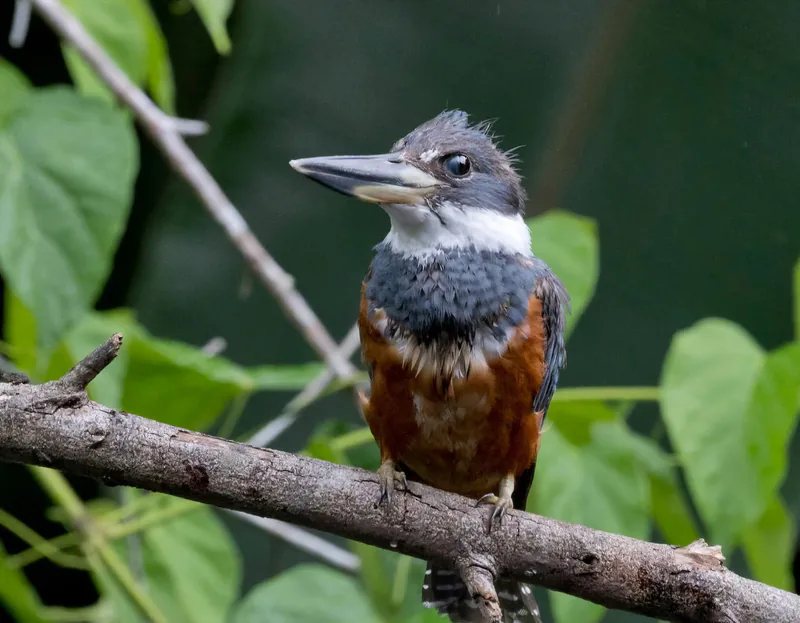
- Belted Kingfisher (Megaceryle alcyon): occasional. From the third week of October to the end of March; latest record 14 November 2025. More on our kingfishers page.
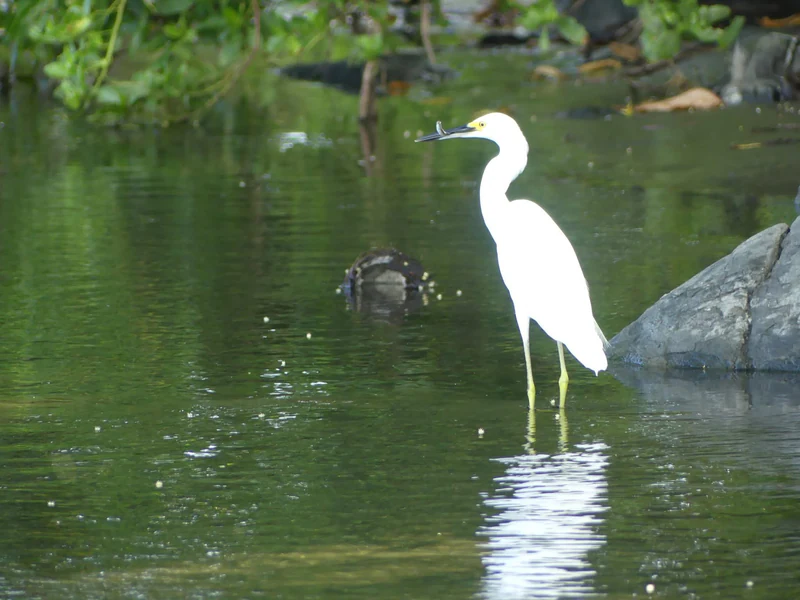
- Great Blue Heron (Ardea herodias): occasional. Most records from late October to mid-April, plus a few in July and August. Compare it with the resident herons in our herons and egrets guide.
- Osprey (Pandion haliaetus): frequent. The AOCR lists it as a migrant, but the hotspot has records in most months, with fewer from May to September. As the tourism board explains, some young Ospreys stay in Costa Rica instead of flying north.
- Peregrine Falcon (Falco peregrinus): occasional, mostly from November to March.
- Common Tern (Sterna hirundo): occasional, from October to early April.
Passage migrants: here for days, not months
Some birds only use Tamarindo as a rest stop. They are easy to miss, and seeing one is a matter of timing and luck:
- Eastern Kingbird (Tyrannus tyrannus): records only in the last week of April and the second week of May. On 28 April 2026 a checklist counted 210 of them moving north.
- Red-eyed Vireo (Vireo olivaceus): rare. Late March to mid-May on the way north, and late September to mid-October on the way south.
- Eastern Wood-Pewee (Contopus virens): occasional, mostly from late September to November.
- Cliff Swallow (Petrochelidon pyrrhonota): occasional, from February to April and again in late August and early September.
- Swainson’s Thrush (Catharus ustulatus): rare, with only three weeks of records; the latest on 22 January 2026.
Month-by-month calendar for Tamarindo
| Month | What the eBird records show |
|---|---|
| January | Winter visitors are settled: Baltimore Oriole, Tennessee Warbler, Summer Tanager and Scissor-tailed Flycatcher. Dry season. |
| February | Same crowd as January. Great Backyard Bird Count, 12–15 February 2027. |
| March | Still full: 33 migrant-pattern species have records. Redstarts, Tennessee Warblers and Belted Kingfishers make their last appearances at the end of the month. |
| April | Departures. Summer Tanager and Scissor-tailed Flycatcher end in the first week; Baltimore Oriole and Northern Yellow Warbler stay to the last week. Widest Barn Swallow bars. Eastern Kingbirds pass in late April. |
| May | Last Barn Swallows (second week) and the last Red-eyed Vireos. Global Big Day on the second Saturday (8 May 2027). The rains begin. |
| June | The quietest month for migrants: two migrant-pattern species. Some whimbrels and turnstones stay through the northern summer. |
| July | Shorebirds come back: Least Sandpiper from the third week, Spotted Sandpiper in the last week. |
| August | Shorebird passage. Surfbird, Sanderling and Western Sandpiper; 45 Surfbirds on 19 August 2026. |
| September | Spotted Sandpiper has its widest bar of the year in the first week. First Barn Swallows and Northern Yellow Warblers; Northern Waterthrush and Prothonotary Warbler in the last week. |
| October | Arrivals: Baltimore Oriole from the first week, Tennessee Warbler and Belted Kingfisher from the third, Summer Tanager, Scissor-tailed Flycatcher and American Redstart in the last week. October Big Day (10 October 2026). |
| November | Full winter set: 33 migrant-pattern species have records. In November 2026, 46 species had been reported at the hotspot by the 18th. |
| December | Winter visitors in place as the dry season starts. |
Weeks follow eBird: week 1 is days 1–7, week 2 days 8–14, week 3 days 15–21 and week 4 from the 22nd to the end of the month.
Count with the world: eBird events
Three global counts let you add your Tamarindo sightings to a worldwide snapshot. All of them feed into eBird, the project managed by the Cornell Lab of Ornithology:
- Great Backyard Bird Count: four days every February. In 2026 it ran from 13 to 16 February; the next one is 12–15 February 2027.
- Global Big Day: one day in May. It was on 9 May 2026, and the next is on 8 May 2027.
- October Big Day: one day in October, at the height of fall migration. It was on 10 October 2026.
To take part, record a checklist at the hotspot «Tamarindo, Guanacaste, Costa Rica» with the eBird app and submit it. The Cornell Lab’s Merlin Bird ID app can help you with names.
The migrant table
The table below is built from the same eBird data: the migrant species of the hotspot and the months in which each one has been recorded. Use it together with the full Tamarindo bird list.
| Species | Months recorded | On checklists | Last record |
|---|---|---|---|
| Plain-breasted Ground Dove Columbina minuta | Rare | January 12, 2026 | |
| Mangrove Cuckoo Coccyzus minor | Rare | February 10, 2025 | |
| Lesser Nighthawk Chordeiles acutipennis | Occasional | April 14, 2025 | |
| White-collared Swift Streptoprocne zonaris | Rare | March 5, 2025 | |
| Green-breasted Mango Anthracothorax prevostii | Occasional | October 30, 2026 | |
| Ruby-throated Hummingbird Archilochus colubris | Occasional | December 10, 2025 | |
| Solitary Sandpiper Tringa solitaria | Occasional | February 25, 2025 | |
| Wandering Tattler Tringa incana | Rare | December 14, 2021 | |
| Greater Yellowlegs Tringa melanoleuca | Occasional | October 11, 2026 | |
| Franklin's Gull Leucophaeus pipixcan | Rare | November 5, 2025 | |
| Gull-billed Tern Gelochelidon nilotica | Rare | February 19, 2025 | |
| Black Tern Chlidonias niger | Rare | July 18, 2026 | |
| Common Tern Sterna hirundo | Occasional | January 12, 2026 | |
| Belted Kingfisher Megaceryle alcyon | Occasional | November 14, 2025 | |
| Peregrine Falcon Falco peregrinus | Occasional | January 29, 2026 | |
| Long-tailed Manakin Chiroxiphia linearis | Occasional | February 10, 2025 | |
| Common Tody-Flycatcher Todirostrum cinereum | Occasional | November 30, 2025 | |
| Western Wood-Pewee Contopus sordidulus | Rare | November 1, 2026 | |
| Eastern Wood-Pewee Contopus virens | Occasional | November 8, 2026 | |
| Nutting's Flycatcher Myiarchus nuttingi | Occasional | March 1, 2026 | |
| Great Crested Flycatcher Myiarchus crinitus | Occasional | November 8, 2026 | |
| Scissor-tailed Flycatcher Tyrannus forficatus | Occasional | March 1, 2026 | |
| Yellow-throated Vireo Vireo flavifrons | Occasional | October 30, 2026 | |
| Philadelphia Vireo Vireo philadelphicus | Rare | February 9, 2025 | |
| Red-eyed Vireo Vireo olivaceus | Rare | May 14, 2024 | |
| Bank Swallow Riparia riparia | Occasional | October 11, 2026 | |
| Southern Rough-winged Swallow Stelgidopteryx ruficollis | Occasional | January 23, 2025 | |
| Barn Swallow Hirundo rustica | Frequent | September 25, 2026 | |
| Orchard Oriole Icterus spurius | Occasional | January 12, 2026 | |
| Baltimore Oriole Icterus galbula | Frequent | April 16, 2026 | |
| Northern Waterthrush Parkesia noveboracensis | Occasional | November 1, 2026 | |
| Prothonotary Warbler Protonotaria citrea | Occasional | January 22, 2026 | |
| Tennessee Warbler Leiothlypis peregrina | Occasional | November 1, 2026 | |
| American Redstart Setophaga ruticilla | Occasional | November 21, 2025 | |
| Northern Yellow Warbler Setophaga aestiva | Occasional | November 8, 2026 | |
| Chestnut-capped Warbler Basileuterus delattrii | Rare | January 22, 2026 | |
| Summer Tanager Piranga rubra | Occasional | November 8, 2026 | |
| Painted Bunting Passerina ciris | Occasional | November 1, 2026 |
few records · regular · on many checklists. Source: eBird, hotspot Tamarindo, Guanacaste, Costa Rica (L442998), checked on November 18, 2026. What you see depends on the tide, the season and the animals.
These are records, not promises. What you see on a tour depends on the tide, the season and the birds.
See the season from the water
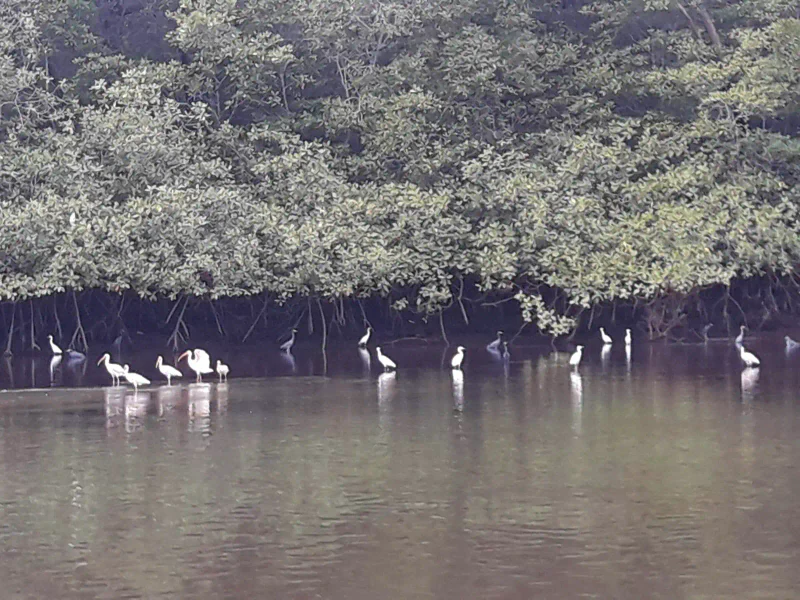
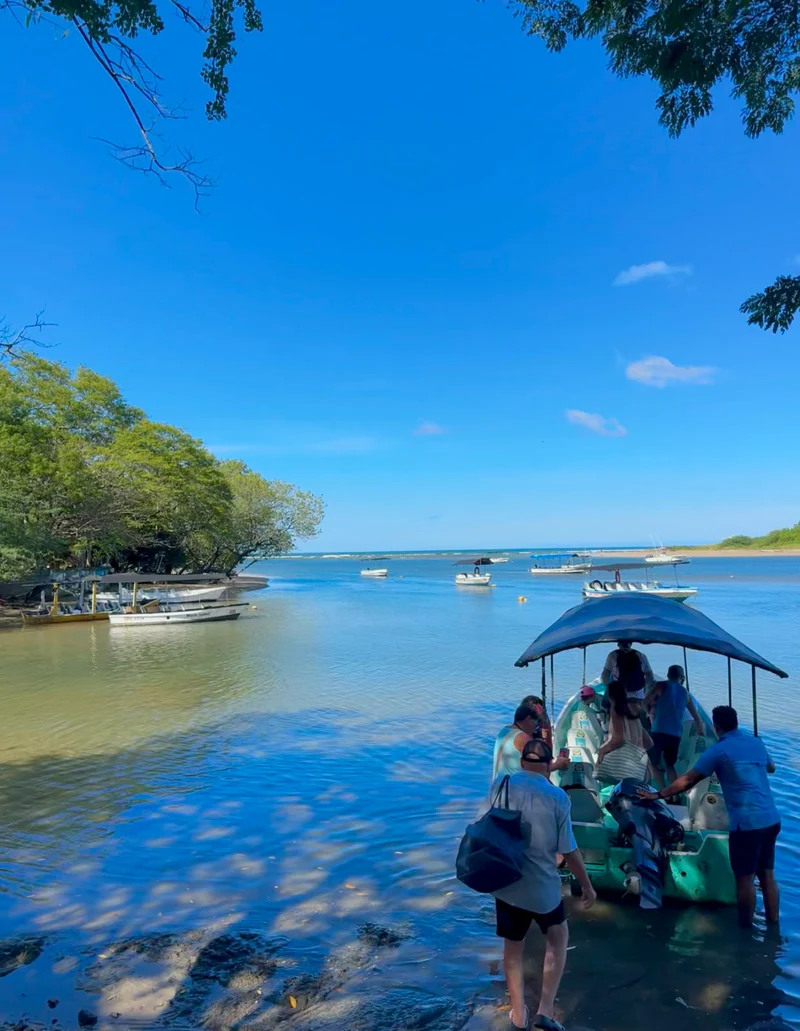
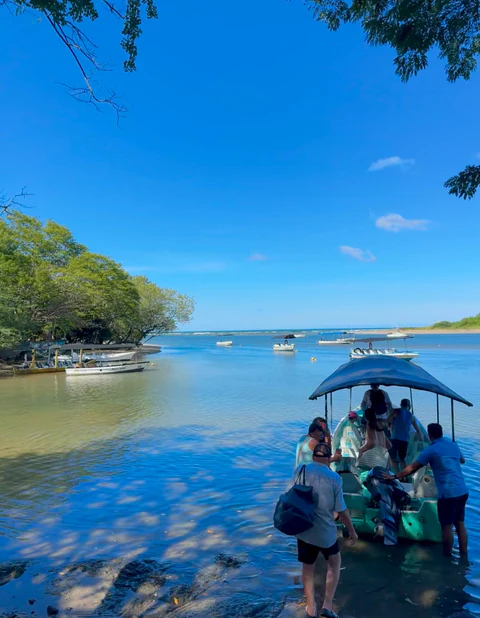
Winter visitors share the estuary with the resident herons, ibises and pelicans, so a single outing can show you both. Join our bird watching tour in Tamarindo, take the wildlife boat tour through the Tamarindo estuary (about 2 hours), or paddle the mangrove by kayak (1.5 to 2 hours), all with a bilingual guide and a start time set by the tide.
Sources
- eBird: Tamarindo hotspot (L442998), consulted 18 Nov 2026
- eBird: bird list of the Tamarindo hotspot
- eBird: bar chart of the Tamarindo hotspot
- Visit Costa Rica (ICT): On the wing
- Visit Costa Rica (ICT): Guanacaste climate guide
- AOCR: Lista Oficial de las Aves de Costa Rica (update June 2026)
- Ramsar Sites Information Service: Tamarindo (site 610)
- Cornell Lab of Ornithology: About eBird
- eBird: Global Big Day
- eBird: October Big Day
- Great Backyard Bird Count
- Cornell Lab: Merlin Bird ID
Reviewed: November 19, 2026 · Valled Tours