Why the Tamarindo estuary is good for birds
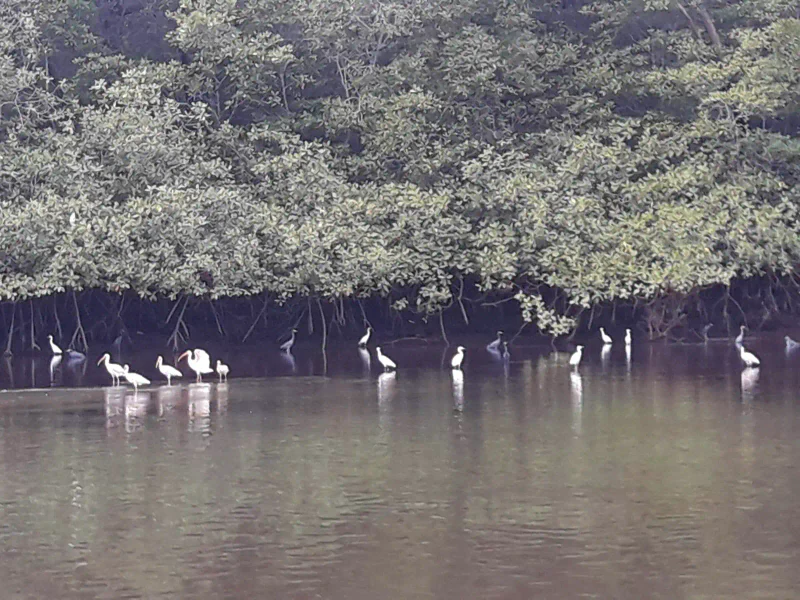
Bird watching in Tamarindo works because three habitats meet in a very small area. The estuary of the Matapalo River is lined with about 400 hectares of nearly intact mangrove, mostly red mangrove with trees of 25 to 30 meters, according to the Ramsar sheet for the Tamarindo wetland (site 610). Right behind the mangrove starts the tropical dry forest that the SINAC protects through its Tempisque Conservation Area. And at the river mouth there is open beach, sandbars and the Pacific.
Each habitat brings its own birds. Herons and ibises feed on the mud banks, kingfishers and swallows work the channels, parrots and motmots call from the dry forest, and pelicans, terns and frigatebirds patrol the shore. That is why the eBird hotspot «Tamarindo» (L442998), run by the Cornell Lab of Ornithology, lists 292 species recorded by birders over the years, 168 of them in 2026 alone (checked on November 18, 2026). The hotspot point sits at the mouth of the estuary, and its checklists also cover the beach and the edge of town, so not every bird on that list lives in the mangrove.
For scale: the official list of the birds of Costa Rica, kept by the Asociación Ornitológica de Costa Rica (AOCR), counted 922 species in its 2019 update. One river mouth on the Guanacaste coast holds close to a third of that number.
Tamarindo estuary birds to look for, by group
Throughout this site we describe each bird with four words: common, frequent, occasional and rare. They come from the weekly eBird bar charts for this hotspot and tell you how often a species shows up in birders' checklists. They are not a promise: what you see depends on the tide, the season and the birds themselves. The table shows a few representative species, with the months they have been recorded.
| Species | Months recorded | On checklists | Last record |
|---|---|---|---|
| Reddish Egret Egretta rufescens | Frequent | May 2, 2026 | |
| Snowy Egret Egretta thula | Frequent | November 16, 2026 | |
| Little Blue Heron Egretta caerulea | Frequent | September 25, 2026 | |
| Tricolored Heron Egretta tricolor | Common | November 16, 2026 | |
| Great Egret Ardea alba | Common | November 16, 2026 | |
| Green Heron Butorides virescens | Frequent | September 4, 2026 | |
| White Ibis Eudocimus albus | Common | September 30, 2026 | |
| Brown Pelican Pelecanus occidentalis | Common | November 16, 2026 | |
| Magnificent Frigatebird Fregata magnificens | Common | October 29, 2026 | |
| Osprey Pandion haliaetus | Frequent | October 26, 2026 | |
| Crested Caracara Caracara plancus | Frequent | September 19, 2026 | |
| Ringed Kingfisher Megaceryle torquata | Occasional | September 4, 2026 | |
| Mangrove Swallow Tachycineta albilinea | Common | October 11, 2026 | |
| Mangrove Yellow Warbler Setophaga petechia | Occasional | August 21, 2026 |
few records · regular · on many checklists. Source: eBird, hotspot Tamarindo, Guanacaste, Costa Rica (L442998), checked on November 18, 2026. What you see depends on the tide, the season and the animals.
Herons and egrets
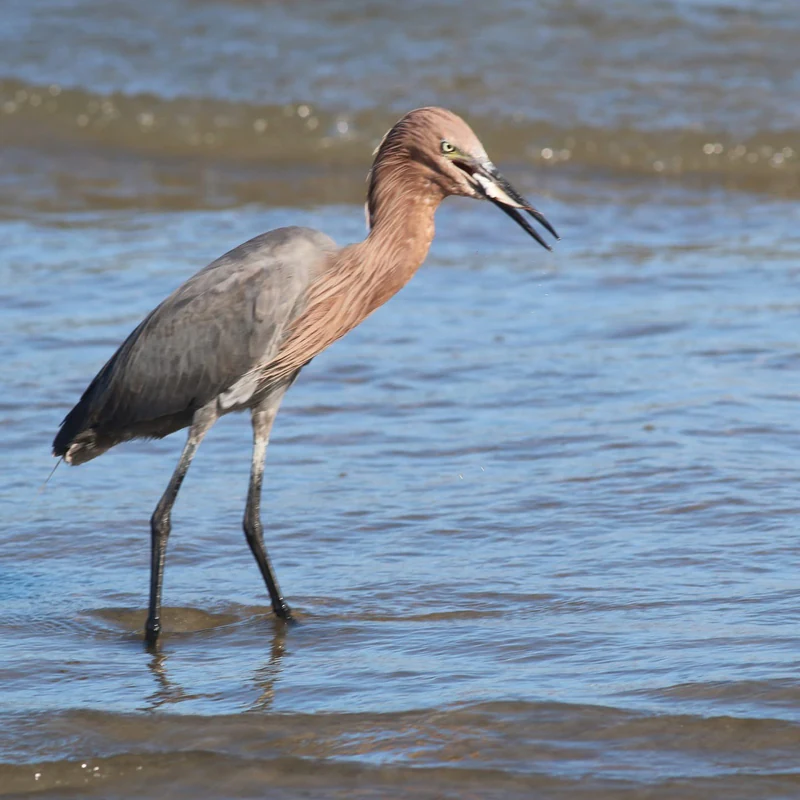
The easiest group to see, and the one most visitors come for. The great egret and the tricolored heron are common in the hotspot's checklists; the snowy egret, the little blue heron, the green heron and the yellow-crowned night heron are frequent. The reddish egret is frequent too. The Cornell Lab describes its two-toned bill, pink with a black tip, and its habit of spreading its wings over its head to shade the water while it hunts.
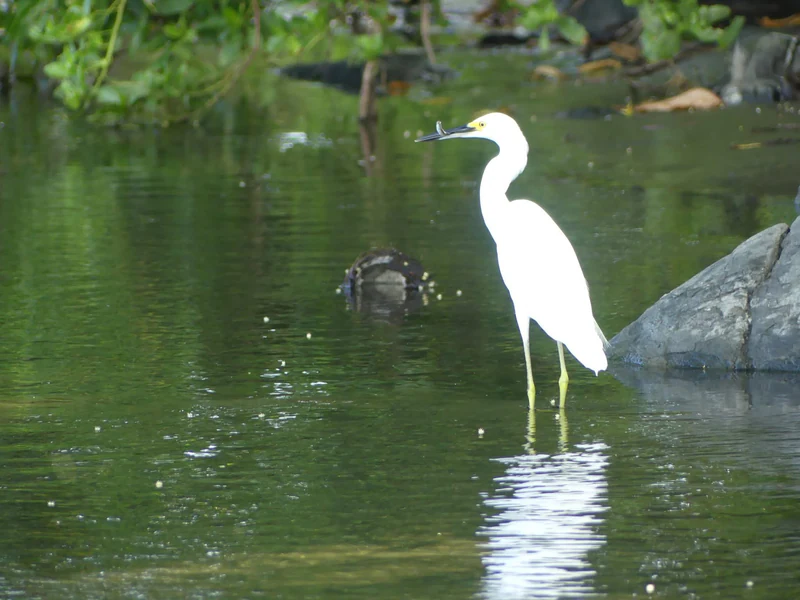
The small green heron waits without moving on low mangrove branches. Sometimes it drops twigs or insects on the water as bait to bring small fish closer, according to the Cornell Lab. To tell the white ones apart, look at bill and feet: an adult snowy egret has a black bill and yellow feet, while the great egret has the opposite, a yellow bill and black feet (Cornell Lab). Our guide to the herons and egrets of Costa Rica goes through every species.
White ibis and other waders
The white ibis is common, often in flocks on the mud. It walks through shallow water with its curved bill sunk in the soft bottom, feeling for crabs and other prey, and pinches what it finds like a pair of tweezers (Cornell Lab). The wood stork is occasional.
Pelicans and frigatebirds
Look up and out to sea. The brown pelican is common and dives headfirst from the air to catch fish, from as high as 65 feet (about 20 meters), says the Cornell Lab. The magnificent frigatebird is common too: a long-winged black bird that rarely lands on the water, because its feathers are not waterproof, and that steals food from other birds in midair (Cornell Lab). The neotropic cormorant is common on the channels.
Kingfishers
eBird lists five kingfishers at the hotspot. The ringed, Amazon and green kingfishers are occasional through the year; the belted kingfisher is an occasional migrant from October to March. The American pygmy kingfisher is rare: its last record is from July 2014, so do not count on it. With the belted kingfisher, you will probably hear a loud rattling call before you see the bird (Cornell Lab). More in our page on the kingfishers of the estuary.
Raptors of the estuary
The osprey is frequent, with most records from October to April and a few in the middle of the year. It hunts fish, and barbed pads on the soles of its feet help it grip them (Cornell Lab). The Ramsar sheet lists it among the threatened species of the wetland, together with the great black hawk, which is occasional here.
The crested caracara, called querque in Costa Rica, is frequent. It is a falcon that spends a lot of time walking on the ground, often next to vultures at a carcass (Cornell Lab). The yellow-headed caracara, a smaller relative with a pale head, is frequent as well.
Mangrove birds
A few birds are named after the mangrove itself. The mangrove swallow is common in the hotspot's checklists all year. The mangrove form of the yellow warbler (eBird calls it Mangrove Yellow Warbler) is occasional. The mangrove vireo and the mangrove cuckoo are rare. The mangrove hummingbird, a species endemic to Costa Rica (Revista de Biología Tropical, UCR, 2024), has very few records here, the last one from 2019: it is rare, and no guide can promise it.
Dry forest and beach birds
From the trees at the edge of the estuary come the white-throated magpie-jay, the turquoise-browed motmot, the orange-fronted parakeet, the white-fronted amazon and Hoffmann's woodpecker, all common. On the beach and the sandbars, the royal tern, the ruddy turnstone and the spotted sandpiper are common, and the Hudsonian whimbrel, the semipalmated plover and the sandwich and elegant terns are frequent. The full Tamarindo bird checklist has all 292 species, with their months.
Seasons: residents and northern migrants
Most of the birds above live in Tamarindo all year. From September and October to April, birds that nest in the United States and Canada join them for the northern winter. In the hotspot's eBird bars, the northern waterthrush and the prothonotary warbler appear from September, the Baltimore oriole (frequent) from October, and the barn swallow (frequent) from September to May. Most of them are gone by May.
If you are visiting from North America, some of these may be birds from your own backyard. Our guide to Costa Rica bird migration has the arrival and departure months for every migrant on the list.
On the water: tide, boat or kayak
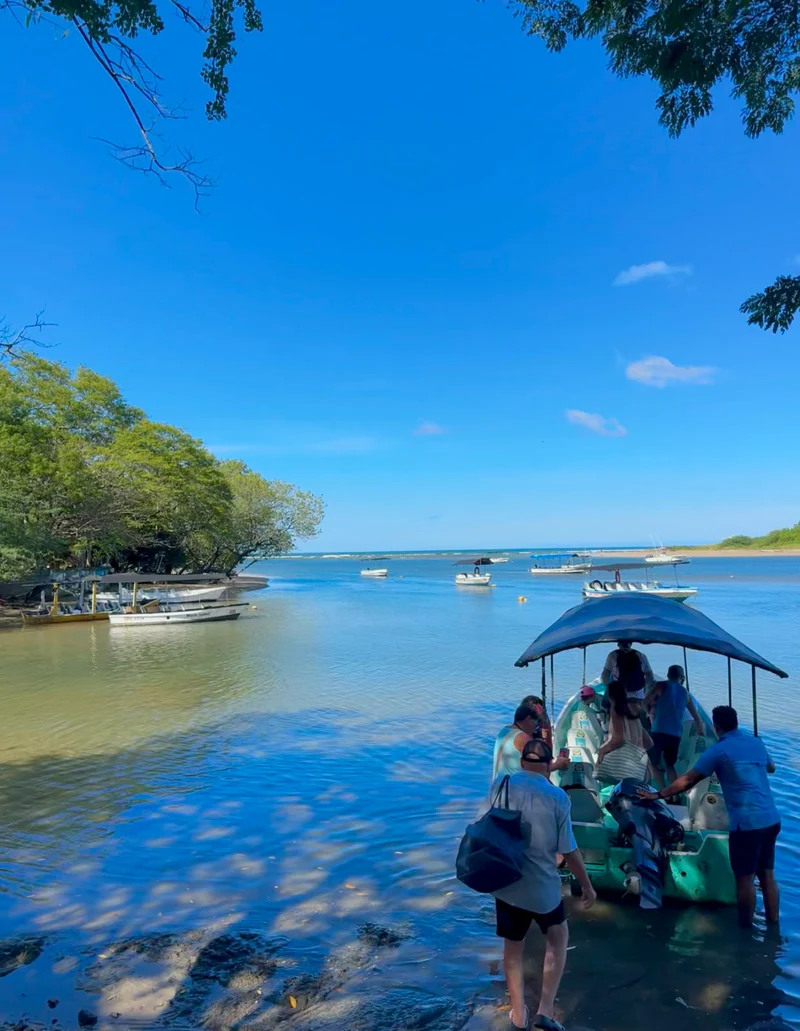
The tide sets the departure time: at low tide more mud is exposed and more birds feed, so we confirm the time for your date on WhatsApp.
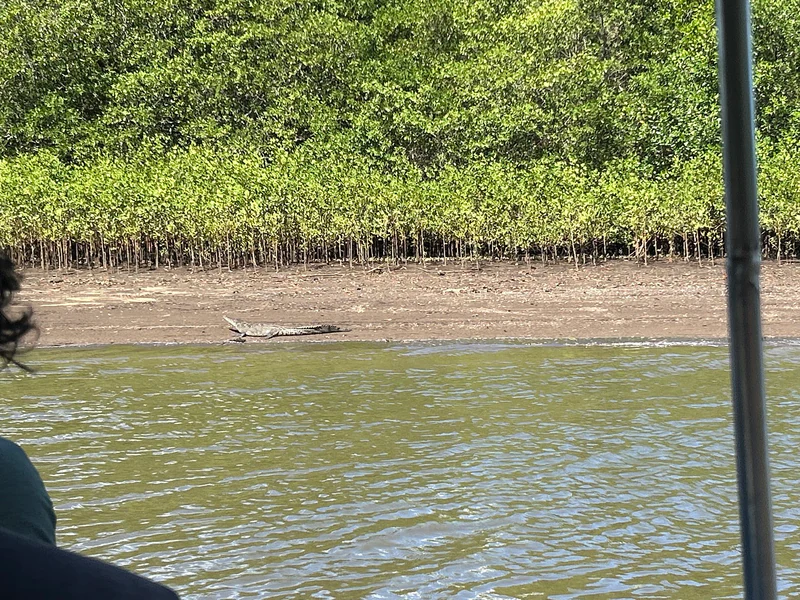
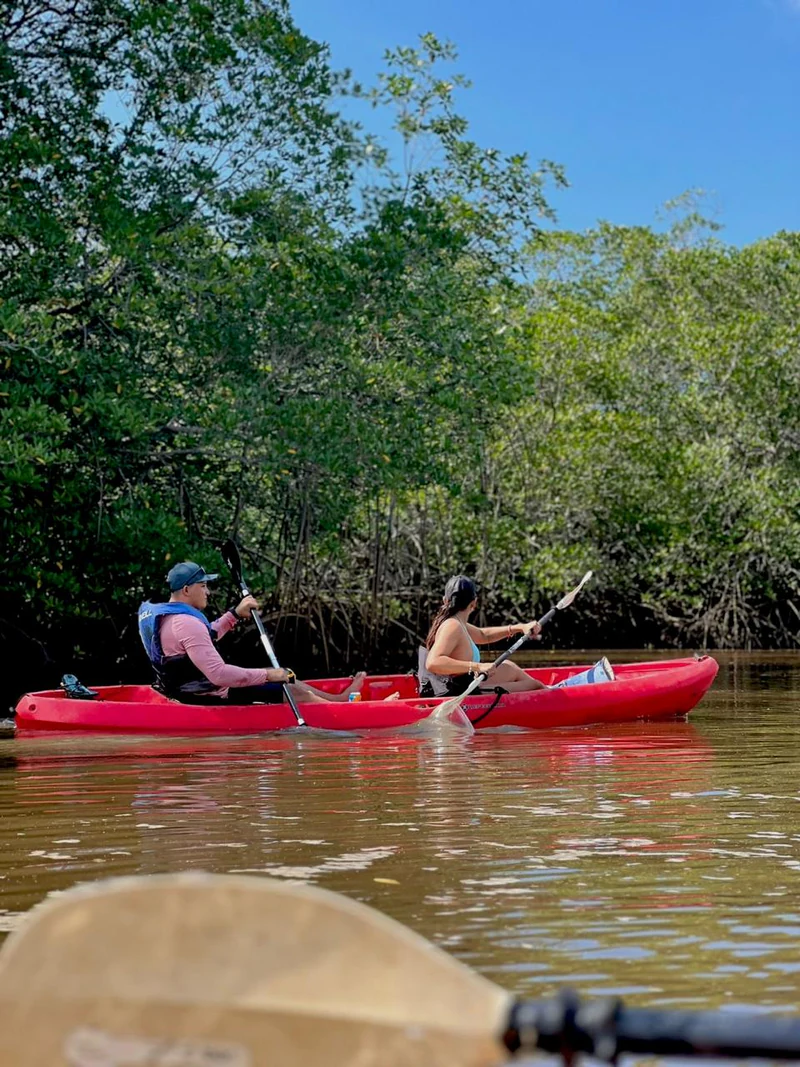
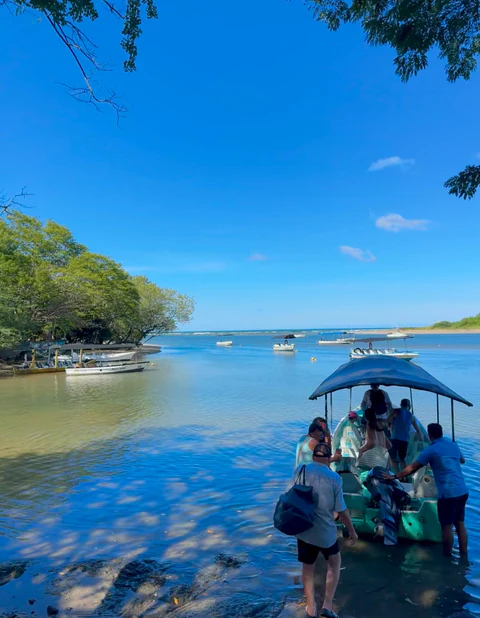
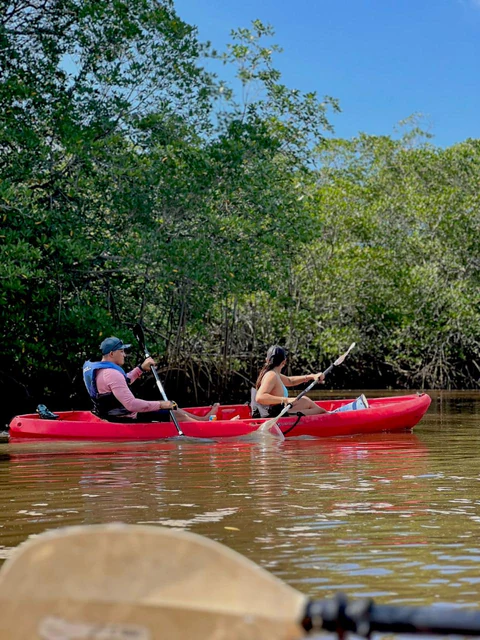
The wildlife boat tour in the Tamarindo estuary covers more water in about two hours. To paddle the mangrove by kayak is slower and silent, and birds often let a quiet kayak come closer.
If birds are the main reason for your trip, our bird watching tour in Tamarindo page explains how to book either tour with a birding focus.
What to bring
- Binoculars, if you have them: birds on the far bank look small.
- A camera or a phone with zoom (in a dry bag on the kayak).
- Neutral-colored clothes, a hat, sunscreen and insect repellent.
- Merlin and eBird on your phone, with the offline content for Costa Rica downloaded before you arrive.
Apps that help: Merlin Bird ID and eBird
Both apps come from the Cornell Lab of Ornithology and cost nothing to download and use. Merlin Bird ID suggests a name from a photo, from a recording of a song or from a few simple questions about size, colors and behavior. Its Sound ID feature can identify more than 2,000 species by sound, including common birds of Central America, according to the Merlin FAQ.
To use Merlin without signal, download the offline content for Costa Rica and run one identification in Tamarindo while you are still online: the app keeps your six most recent locations and then works offline.
eBird Mobile is the app to keep your list. You enter each species and how many you saw, and the checklist goes to your eBird account. It works without signal: you save the checklist on the phone and submit it later, once you have a connection (eBird Help Center). Your checklist from the estuary becomes part of the same hotspot data this guide is built on.
How to get close without scaring them
- Speak quietly and avoid sudden moves.
- Let your guide bring the boat or kayak closer slowly, and stop at a distance.
- If a bird stops feeding and starts watching you, give it more room.
- Do not try to make a bird fly for a photo: a bird in flight is a bird that stopped feeding or resting.
Birding ethics in the estuary
No playback near nests. Do not play bird songs from your phone to call birds in, above all near nests. Audubon's guide to ethical bird photography advises against playback: a bird that leaves its nest to confront a rival it thinks it heard leaves its eggs or chicks exposed to predators and weather. The ABA Code of Birding Ethics asks birders to limit recordings, especially for rare or threatened species, and to be particularly careful around active nests, roosts and feeding sites.
Never feed wild animals. In Costa Rica, article 116 of the Wildlife Conservation Law (Ley 7317) fines anyone who feeds wildlife without SINAC authorization. Food changes how birds behave and what they eat.
It is a protected area. The former Tamarindo Wildlife Refuge is today part of a national marine park managed by SINAC through the Tempisque Conservation Area. Leave branches, nests and roots as you find them.
Meet some of the estuary birds
Each species page has photos, how to recognize the bird, and when it has been recorded in Tamarindo. For the mammals, reptiles and crabs too, open the Tamarindo estuary field guide.
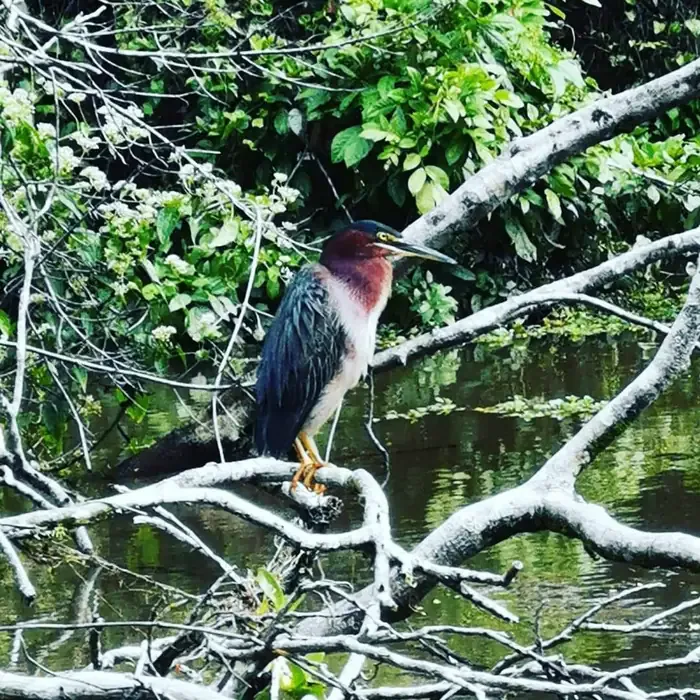
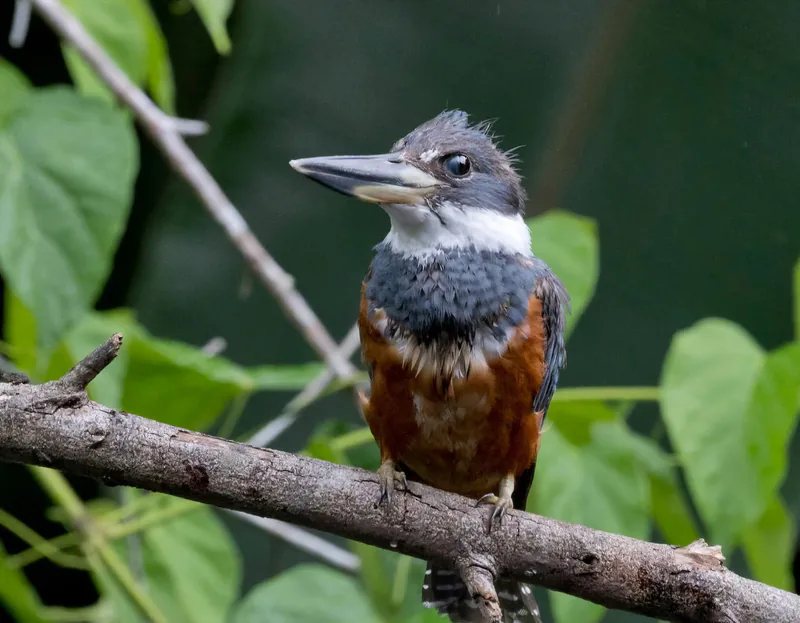
This little blue heron, a frequent bird in the hotspot's checklists, was filmed on a mangrove root in the estuary.
Ready to see them? Choose the boat tour or the kayak tour on our booking page, and tell us you want to watch birds.
Sources
- eBird (Cornell Lab of Ornithology): Tamarindo hotspot (L442998), checked 18/11/2026
- Ramsar Sites Information Service: Tamarindo (site 610)
- SINAC: Área de Conservación Tempisque
- AOCR: Lista Oficial de las Aves de Costa Rica, actualización 2019 (UNA repository)
- Cornell Lab, All About Birds: Reddish Egret identification
- Cornell Lab, All About Birds: Green Heron
- Cornell Lab, All About Birds: Snowy Egret identification
- Cornell Lab, All About Birds: White Ibis life history
- Cornell Lab, All About Birds: Brown Pelican life history
- Cornell Lab, All About Birds: Magnificent Frigatebird
- Cornell Lab, All About Birds: Belted Kingfisher
- Cornell Lab, All About Birds: Osprey
- Cornell Lab, All About Birds: Crested Caracara
- Albertazzi, Alvarado & Stiles (2024), Mangrove Hummingbird, Revista de Biología Tropical (UCR)
- eBird Help Center: Merlin Bird ID FAQs
- eBird Help Center: Enter sightings with eBird Mobile
- Audubon: Guide to Ethical Bird Photography and Videography
- American Birding Association: Code of Birding Ethics
- Ley 7317 de Conservación de la Vida Silvestre, art. 116 (SCIJ)
Reviewed: November 18, 2026 · Valled Tours