Herons are the easiest big birds to watch in the Tamarindo estuary. They stand still, they hunt in the open, and many of them tolerate a quiet boat. They can also be confusing: there are white ones, dark ones, a white one that turns blue, and a dark one called an “egret”. This guide sorts them out with data, not guesswork.
The list comes from eBird, the Cornell Lab of Ornithology’s database of bird sightings. The Tamarindo hotspot (L442998) sits at the mouth of the estuary and also covers the beach and the edge of town. On 18 November 2026 it listed 292 species, and 12 of them are herons. This guide covers 11. The twelfth, the boat-billed heron, is a night bird of the mangrove that we leave out here.
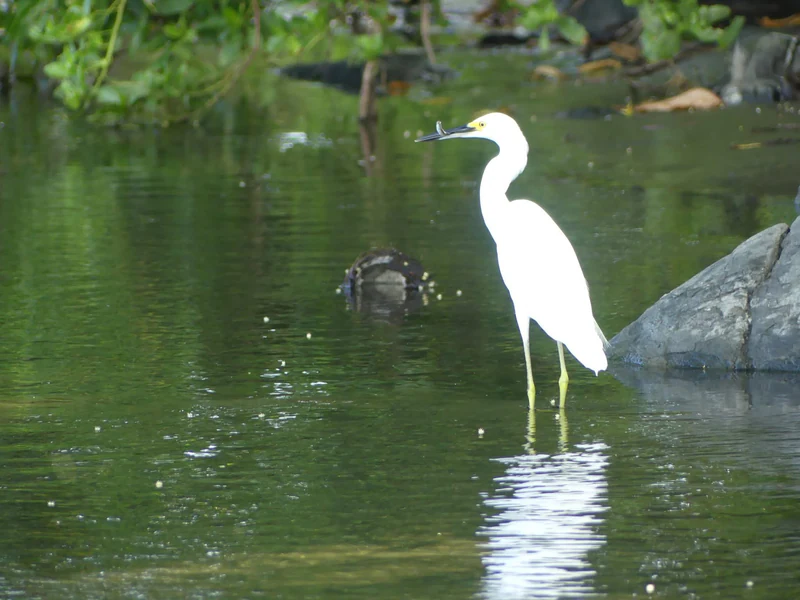
The short answer: the herons you are most likely to see
We sort each species with eBird’s weekly bar charts for the hotspot into common, frequent, occasional or rare, the same scale used across this site. Nothing is guaranteed: what you see depends on the tide, the season and the birds.
- Common: tricolored heron and great egret. Both appear in the eBird lists almost every week of the year.
- Frequent: little blue heron, snowy egret, western cattle-egret, green heron, yellow-crowned night heron and reddish egret.
- Occasional: great blue heron and bare-throated tiger-heron.
- Rare: black-crowned night heron. The last eBird record at the hotspot is from March 2019.
Heron vs egret: is there a difference?
Not in biology. Kenn Kaufman, field editor of Audubon magazine, explains that there is no taxonomic difference between herons and egrets. Both words name birds of the same family, the Ardeidae. The labels follow color more than family ties: in English, white species tend to be called “egrets” and darker ones “herons”, but the rule breaks all the time. Tamarindo shows it well:
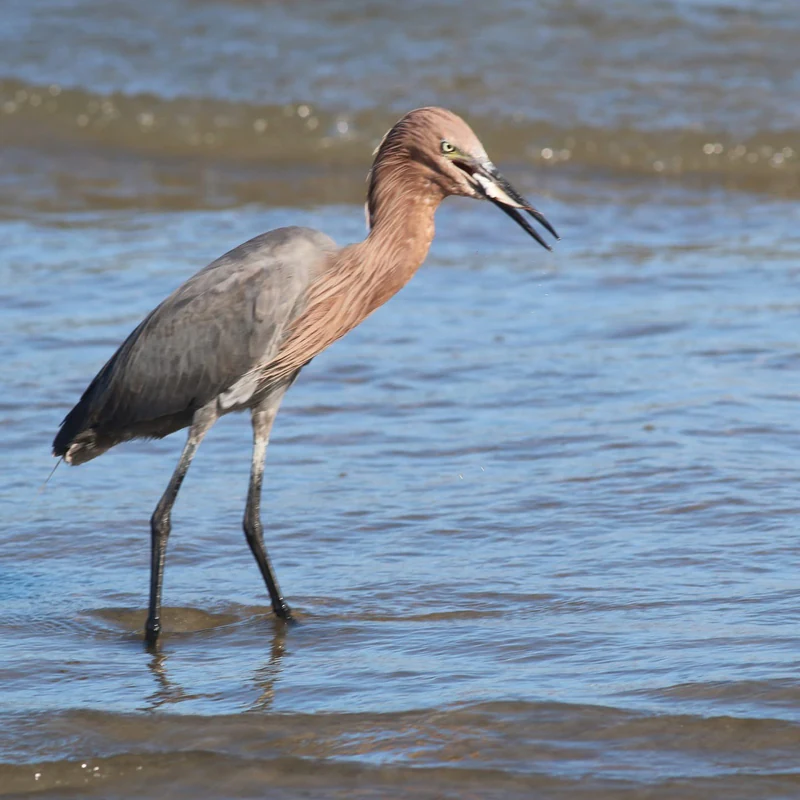
- The reddish egret is usually dark: slate-gray body, rusty head and neck.
- The great egret is more closely related to the great blue heron than to the other egrets.
- The snowy egret and the reddish egret share the genus Egretta with the little blue heron and the tricolored heron.
- The little blue heron is white as a juvenile and dark blue as an adult.
So when someone on the boat asks “heron or egret?”, the useful answer is the species name. The table below helps you get there.
How to tell them apart
Start with size and overall color, then check the bill and the legs. Sizes are total length, from bill tip to tail, taken from the Cornell Lab’s All About Birds identification pages. Bill and leg colors can change in the breeding season.
| Species | Size | Color | Bill | Legs | Behavior |
|---|---|---|---|---|---|
| Great egret | 94–104 cm (37–41 in) | All white | Yellow-orange | Black | Stands still, then strikes fast |
| Snowy egret | 56–66 cm (22–26 in) | All white | Black, yellow skin at the base | Black, with yellow feet | May run through the water with wings spread |
| Western cattle-egret | 46–56 cm (18–22 in) | White; golden plumes when breeding | Yellow, short and thick | Yellow | Hunts insects in grass, less often in water |
| Little blue heron | 56–74 cm (22–29 in) | Adult slaty blue with a maroon neck; juvenile white | Pale blue base, black tip | Greenish | Stands and waits, often in quiet corners |
| Tricolored heron | 60–70 cm (24–28 in) | Blue-gray and lavender, white belly | Long and thin | Yellowish; pink when breeding | Stalks, or pirouettes with sharp turns |
| Reddish egret | 70–80 cm (28–31 in) | Gray body, shaggy rusty neck; rare white form | Pink with a black tip (breeding adults) | Cobalt blue | Runs, lurches, opens its wings |
| Great blue heron | 97–137 cm (38–54 in) | Blue-gray, black stripe over the eye | Thick, dagger-like | Long | Wades slowly or stands like a statue |
| Green heron | 41–46 cm (16–18 in) | Looks dark; green back, chestnut neck | Long, dagger-like | Yellow, fairly short | Crouches on a branch at the water’s edge |
| Yellow-crowned night heron | 55–70 cm (22–28 in) | Gray; black head, white cheek, pale yellow crown | Thick and short | Orange-yellow | Stalks crabs, hunched forward |
| Black-crowned night heron | 58–66 cm (23–26 in) | Light gray; black back and crown | Black (adults) | Short | Rests by day, feeds at dusk and night |
| Bare-throated tiger-heron | Medium-sized, bulky | Gray face, black crown, rufous belly, bare throat; juvenile barred | Black and yellow | Not a key mark | Feeds in the open on fish, frogs and rodents |
Sources: Cornell Lab, All About Birds (sizes and field marks) and Birds of the World (bare-throated tiger-heron).
White herons in Costa Rica: five ways to be white
A white heron in Tamarindo can be one of five birds. Three are white as adults: the great egret, the snowy egret and the western cattle-egret. The other two catch people out: a young little blue heron, and the white form of the reddish egret.
- Great egret: the tallest white bird in the estuary, close to a meter long. Yellow-orange bill, black legs, long S-shaped neck.
- Snowy egret: smaller and busier. Black bill and black legs with yellow feet. Cornell notes that it sometimes runs through the shallows with its wings open to chase fish.
- Western cattle-egret: small and stocky, with a short, thick yellow bill. It hunts insects on the ground in grassy places and is seen in water much less often than other herons.
- Juvenile little blue heron: all white, with a two-toned bill and greenish legs. As it molts it becomes a patchwork of white and blue.
- White reddish egret: the rare form. Look for the pink bill with a black tip and the shaggy neck.
The dark herons
Little blue heron
Adults look almost black from a distance. Up close, the head and neck are purple-maroon and the body slaty blue. It is a patient hunter: it stands, watches and walks slowly to the next spot. Cornell says it usually appears in small numbers, often tucked into hidden corners. Our video shows one on a mangrove root in the estuary.
Tricolored heron
The one with the white belly: every other dark heron here is dark underneath. It is slim, with a long thin neck and bill, and in the breeding season the skin around the bill turns bright blue. It is the heron reported most often at the Tamarindo hotspot, with records in 46 of eBird’s 48 weeks.
Reddish egret
The showman. It runs through the shallows, lurches sideways, opens its wings and stabs at fish. Sometimes it lifts both wings over its head to shade the water, a trick called canopy feeding. BirdLife International lists it as Near Threatened. More on our reddish egret page.
Great blue heron
The biggest heron on the list, up to 137 cm long, with a black stripe over the eye. In Tamarindo it is occasional, and most eBird records fall between December and April, with only a few in other months. To see which birds come down from the north and when, read our Costa Rica bird migration guide.
Small, stocky and secretive
Green heron
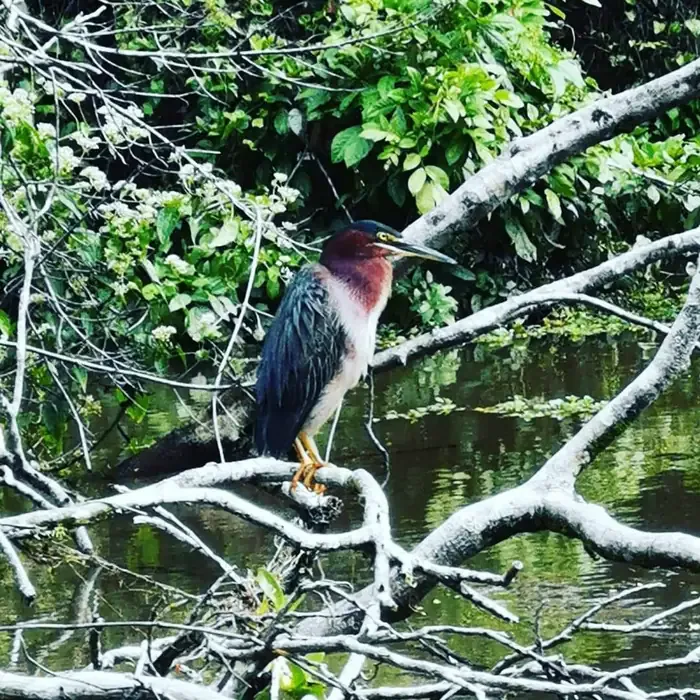
Crow-sized, hunched and easy to miss. From a distance it looks dark; in good light the back is velvet green and the neck chestnut. It crouches on low branches and on roots at the water’s edge. It is also one of the few birds known to use tools: Cornell describes green herons dropping bait such as insects, feathers or bread crusts on the water to lure fish. Full profile on our green heron page.
Night herons
Two species with very different odds. The yellow-crowned night heron is frequent: a stocky gray bird with a black-and-white face and a pale yellow crown. Cornell says most of its prey are crustaceans, especially crabs, and the Ramsar file for Tamarindo describes crabs digging tunnels in the mangrove mud. The black-crowned night heron is rare here: the last eBird report at the hotspot is from 13 March 2019.
Bare-throated tiger-heron
A bulky heron of Central America. Adults have a gray face, black crown, black-and-yellow bill and rufous underparts; a patch of bare skin on the throat gives the bird its name. Young birds are barred black and rust all over. Birds of the World notes that it often feeds in the open. At the Tamarindo hotspot it is occasional, and the last eBird record is from 25 December 2024.
When herons are reported in Tamarindo
This table comes straight from eBird: the months with at least one record and how often each species shows up. Most herons here are reported all year. The reddish egret has records in every month except June, most of them between November and May; as of 18 November 2026, the latest report at the hotspot is from 2 May 2026. For all 292 species, see our Tamarindo bird checklist.
| Species | Months recorded | On checklists | Last record |
|---|---|---|---|
| Tricolored Heron Egretta tricolor | Common | November 16, 2026 | |
| Great Egret Ardea alba | Common | November 16, 2026 | |
| Little Blue Heron Egretta caerulea | Frequent | September 25, 2026 | |
| Snowy Egret Egretta thula | Frequent | November 16, 2026 | |
| Reddish Egret Egretta rufescens | Frequent | May 2, 2026 | |
| Western Cattle-Egret Ardea ibis | Frequent | September 4, 2026 | |
| Green Heron Butorides virescens | Frequent | September 4, 2026 | |
| Yellow-crowned Night Heron Nyctanassa violacea | Frequent | August 8, 2026 | |
| Great Blue Heron Ardea herodias | Occasional | July 24, 2026 | |
| Bare-throated Tiger-Heron Tigrisoma mexicanum | Occasional | December 25, 2024 | |
| Black-crowned Night Heron Nycticorax nycticorax | Rare | March 13, 2019 |
few records · regular · on many checklists. Source: eBird, hotspot Tamarindo, Guanacaste, Costa Rica (L442998), checked on November 18, 2026. What you see depends on the tide, the season and the animals.
eBird depends on people submitting checklists, so a blank month can simply mean nobody reported the bird that month.
Five clues to name a heron fast
- Size against something you know. The green heron is about the size of a crow; the great egret is close to a meter long.
- Belly color. A white belly on a dark heron means tricolored heron.
- Bill. Yellow-orange: great egret. Black: snowy egret. Pink with a black tip: reddish egret. Short and yellow: cattle-egret.
- Feet. Black legs with yellow feet are the snowy egret’s signature.
- Behavior. Running and wing-flicking point to the reddish or snowy egret. Standing still for minutes points to the little blue heron, the great egret or the green heron.
Watch from the boat or the kayak and keep your distance. Feeding wild animals without a permit is fined under article 116 of Costa Rica’s Wildlife Conservation Law 7317.
See them on a tour
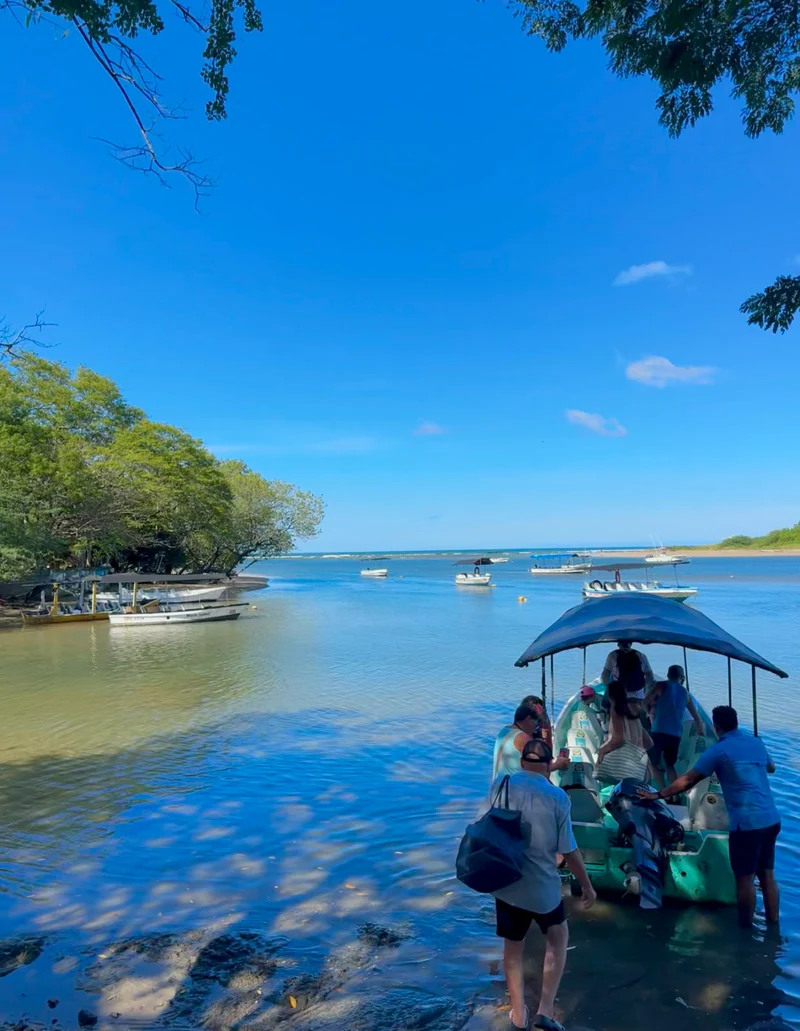
Herons are part of every trip into the estuary, and they are the main event on our bird watching tour in Tamarindo. For a relaxed ride with room for binoculars, take the wildlife boat tour in the Tamarindo estuary. To get close to the mangrove roots where green herons hunt, paddle the mangrove by kayak. Want more birds? Start with our Tamarindo bird watching guide or browse the wildlife field guide.
Sources
- eBird: Tamarindo hotspot (L442998)
- eBird: bar charts for the Tamarindo hotspot
- Audubon: Ask Kenn, egret, ibis, flamingo, heron, stork
- Audubon Field Guide: Reddish Egret
- Cornell Lab, All About Birds: Great Egret
- Cornell Lab, All About Birds: Snowy Egret
- Cornell Lab, All About Birds: Western Cattle-Egret
- Cornell Lab, All About Birds: Little Blue Heron
- Cornell Lab, All About Birds: Tricolored Heron
- Cornell Lab, All About Birds: Reddish Egret
- Cornell Lab, All About Birds: Great Blue Heron
- Cornell Lab, All About Birds: Green Heron
- Cornell Lab, All About Birds: Yellow-crowned Night Heron
- Cornell Lab, All About Birds: Black-crowned Night Heron
- Birds of the World: Bare-throated Tiger-Heron
- BirdLife DataZone: Reddish Egret
- Museo Nacional de Costa Rica: Catálogo de Especies de Garzas de Costa Rica
- Ramsar Sites Information Service: Tamarindo (610)
- Costa Rica, Ley 7317 de Conservación de la Vida Silvestre
Reviewed: November 18, 2026 · Valled Tours