On eBird at the Tamarindo estuary
| Species | Months recorded | On checklists | Last record |
|---|---|---|---|
| Bare-throated Tiger-Heron Tigrisoma mexicanum | Occasional | December 25, 2024 |
few records · regular · on many checklists. Source: eBird, hotspot Tamarindo, Guanacaste, Costa Rica (L442998), checked on November 18, 2026. What you see depends on the tide, the season and the animals.
Some herons dash and splash. The bare-throated tiger-heron does almost nothing, for a very long time. It stands like a statue at the edge of the water, neck pulled in, until a fish, frog or crab comes within reach of its long bill. Then it strikes.
How to recognize it
It is a large, heavy heron: about 80 cm long and about 1.2 kg, according to Wikipedia’s species account. The key marks:
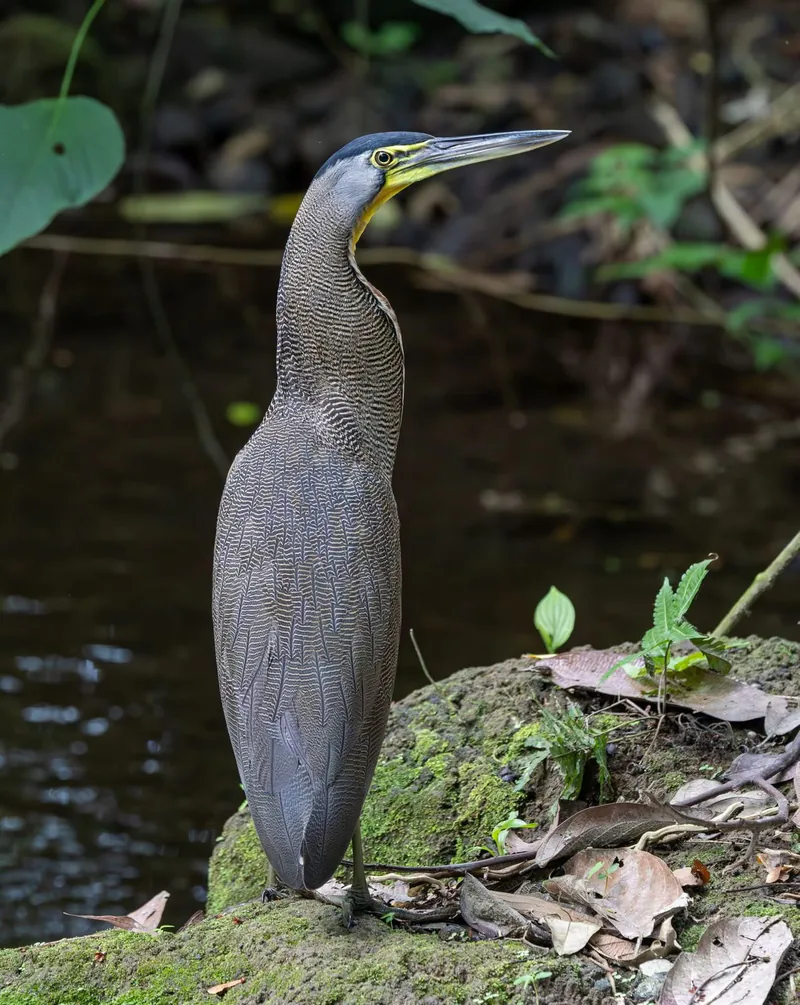
- Bare throat: a patch of naked skin on the throat, greenish yellow to orange in every plumage. It gives the bird its name.
- Adult head: black crown and light gray sides of the face.
- Adult body: blackish upperparts finely barred with buff, a white stripe edged in black down the front of the neck, and dull cinnamon-brown underparts.
- Bill: long and heavy, black and yellow.
- Young birds: buff, coarsely barred with black all over, with a whitish throat and belly. These are the «tiger» stripes.
In flight it looks heavy. Its usual call is a hoarse «howk-howk-howk», and males also give a deep, booming roar. In the estuary, the young bird is the one most likely to puzzle you: a big, striped heron is almost certainly a young tiger-heron. Compare it with the other herons in our guide to the herons and egrets of Costa Rica.
Its many local names
The official list of the birds of Costa Rica calls it garza-tigre cuellinuda, «bare-necked tiger heron», and also records three popular names: garzón, martín peña and pájaro vaco. If you hear your guide or a fisherman use one of them, now you know which bird they mean.
How it hunts
It is a sit-and-wait hunter. Wikipedia describes it waiting motionless for prey such as fish, frogs or crabs, and Birds of the World notes that, unlike its relatives, which hide in thick vegetation, this tiger-heron often feeds in the open, on river and lake banks. It nests alone rather than in heron colonies, on a small, flat platform of sticks in a tree.
Where and when to see it in Tamarindo
In Costa Rica it is a resident: the AOCR list marks it that way, and the heron catalog of the Museo Nacional de Costa Rica lists it from sea level to 500 m, present all year. The Tamarindo estuary is low, brackish and mostly mangrove, as the Ramsar file for the site describes, so check quiet banks and the mangrove edge where the water is calm.
Be ready for patience, though. At the Tamarindo eBird hotspot, which covers the estuary mouth, the beach and the edge of town, the bare-throated tiger-heron is occasional: it has records in 12 of the 48 weeks of eBird’s year, scattered between December and August. As of 18 November 2026 the latest report is from 25 December 2024. No guide can promise it; what you see depends on the tide, the season and the bird.
Is it in trouble?
No. It is listed as Least Concern on the IUCN Red List (BirdLife International assessment, 2018), and the Museo Nacional also lists it as Least Concern in Costa Rica. Like all herons, it depends on healthy wetlands and on being left alone while it hunts.
A fun fact
It has been recorded once in the United States. Wikipedia mentions a single sighting in Hidalgo County, Texas, far from its usual range between Mexico and Colombia.
See it on a tour
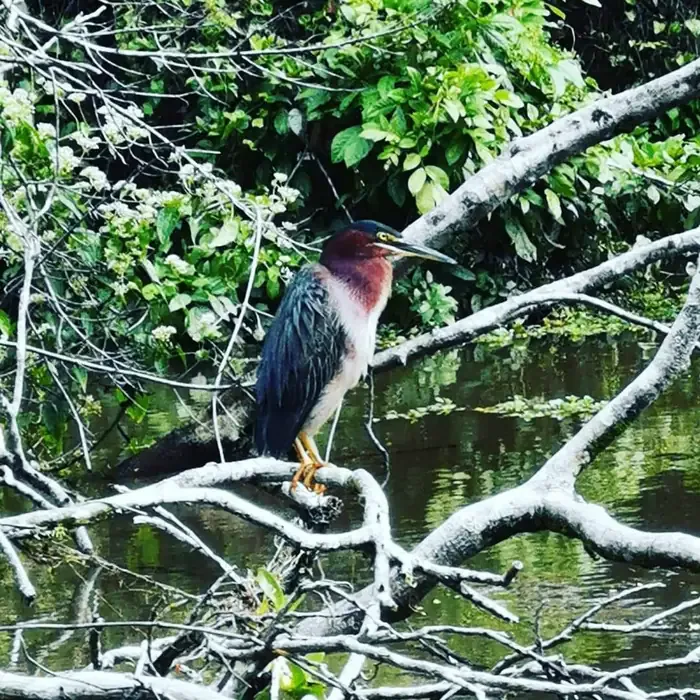
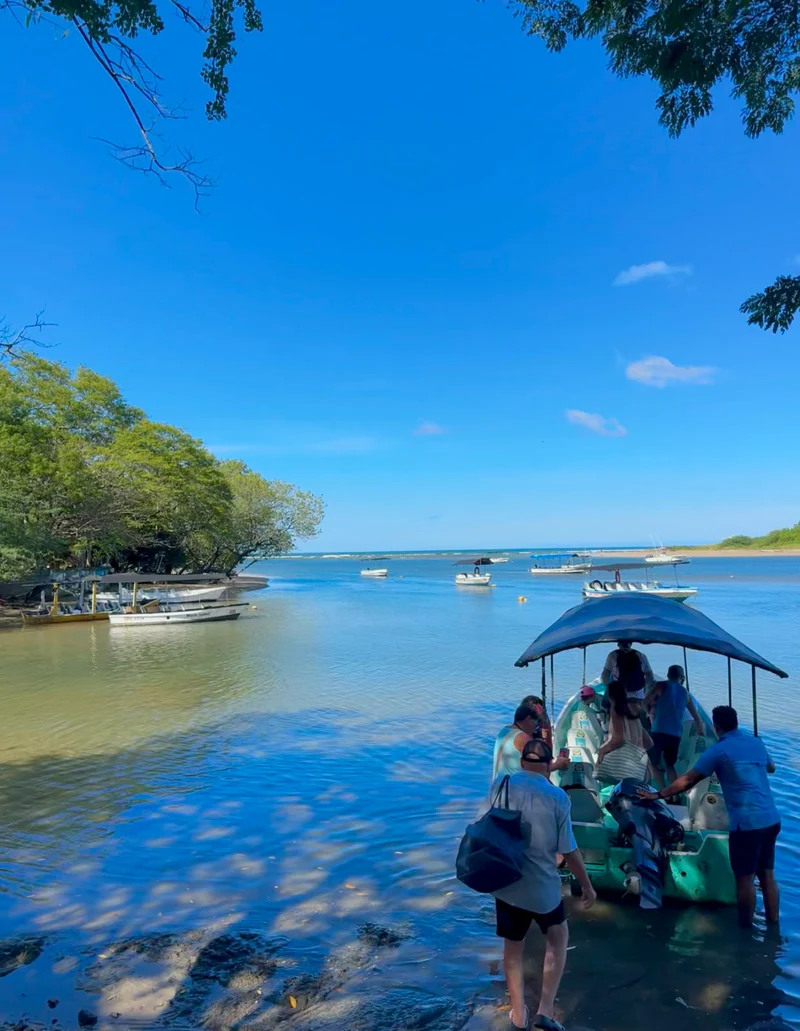
A bird that freezes in place is easiest to watch from a quiet boat. Paddle the mangrove by kayak to glide along the banks without an engine, or join our bird watching tour in Tamarindo. While you wait for it, look for the night herons and the small green heron, which share the same mangrove edge.
Watch, don’t feed. In Costa Rica, feeding wildlife without SINAC authorization is fined under article 116 of the Wildlife Conservation Law (Ley 7317). On our tours, animals are watched from a distance.
Sources
- Wikipedia: Bare-throated tiger heron
- Birds of the World: Bare-throated Tiger-Heron (introduction)
- AOCR: Lista Oficial de las Aves de Costa Rica
- Museo Nacional de Costa Rica: Catálogo de Especies de Garzas de Costa Rica
- Ramsar Sites Information Service: Tamarindo (610)
- eBird: Tamarindo hotspot (L442998)
- eBird: bar charts for the Tamarindo hotspot
Reviewed: November 19, 2026 · Valled Tours