Most visitors come to the estuary for birds and bigger animals. But the busiest residents of the mangrove are the crabs: thousands of them, digging, climbing, waving and eating on every bank. Many of the herons and other animals you came to see are there because the crabs are.
Which crabs live here
The table lists the mangrove crabs with research-grade observations on iNaturalist within 5 km of the mouth of the Tamarindo estuary (checked on 18 November 2026). The number of photos says more about which crabs people notice than about how many there are.
| Crab | Where to look | Observations |
|---|---|---|
| Racer mangrove crab (Goniopsis pulchra) | On the mud and roots at the mangrove edge | 58 |
| Mouthless crab (Cardisoma crassum) | Burrows among mangrove roots and on the drier banks | 49 |
| Tree-climbing mangrove crab (Aratus pacificus) | On the aerial roots, trunks and leaves of the red mangrove | 15 |
| Pacific mangrove ghost crab (Ucides occidentalis) | Burrows in the mangrove mud | 5 |
| Fiddler crabs (Uca stylifera, Leptuca terpsichores, Uca princeps) | Open mud and sand near the channels | 8 |
Research-grade iNaturalist observations within 5 km of 10.315 N, -85.835 W. Beach and rock crabs from the same area are left out.
Fiddler crabs: the wavers
You cannot miss a male fiddler crab: one claw is huge and the other is small. The US National Park Service explains that the male stands by his burrow and moves the big claw back and forth, like someone playing a fiddle, to attract a female. If one comes close, he taps the ground with the claw. Females have two claws of the same size.
Fiddler crabs feed on algae, bacteria, fungi and detritus, the dead and decaying matter that covers the mud. Their burrows are their shelter: when danger comes, they vanish into them. One of the species reported here, Leptuca terpsichores, is even called the dancing fiddler crab.
The crab that climbs trees
Look up at the branches and you may see small crabs on the bark and leaves of the red mangrove. This is the tree-climbing mangrove crab. Until 2014 it was thought to be the same species as the one in the Caribbean and the Atlantic, but a study in Zootaxa showed that the Pacific populations are different, and named them Aratus pacificus. Some of the specimens used to describe it came from Costa Rica.
According to that study, the two species split after the Isthmus of Panama closed, no more than 3.1 million years ago. The Pacific crab lives in close association with the aerial roots and leaves of the red mangrove, the tree that dominates the Tamarindo estuary according to its Ramsar file.
Why the mangrove needs its crabs
For a long time scientists thought that most mangrove leaves were simply washed out to sea by the tides. A review in Aquatic Botany explains how that view changed: crabs keep a large share of the forest’s production inside the mangrove. In American mangroves, the fiddler crab family plays the same role as the leaf-eating crabs of the Old World.
The same review lists their jobs: crabs process large amounts of algae, help retain the mangrove’s production and, as ecosystem engineers, change the texture of the mud and bring air into it with their burrows. Mangrove mud is poor in oxygen, so every burrow matters.
Food for the rest of the estuary
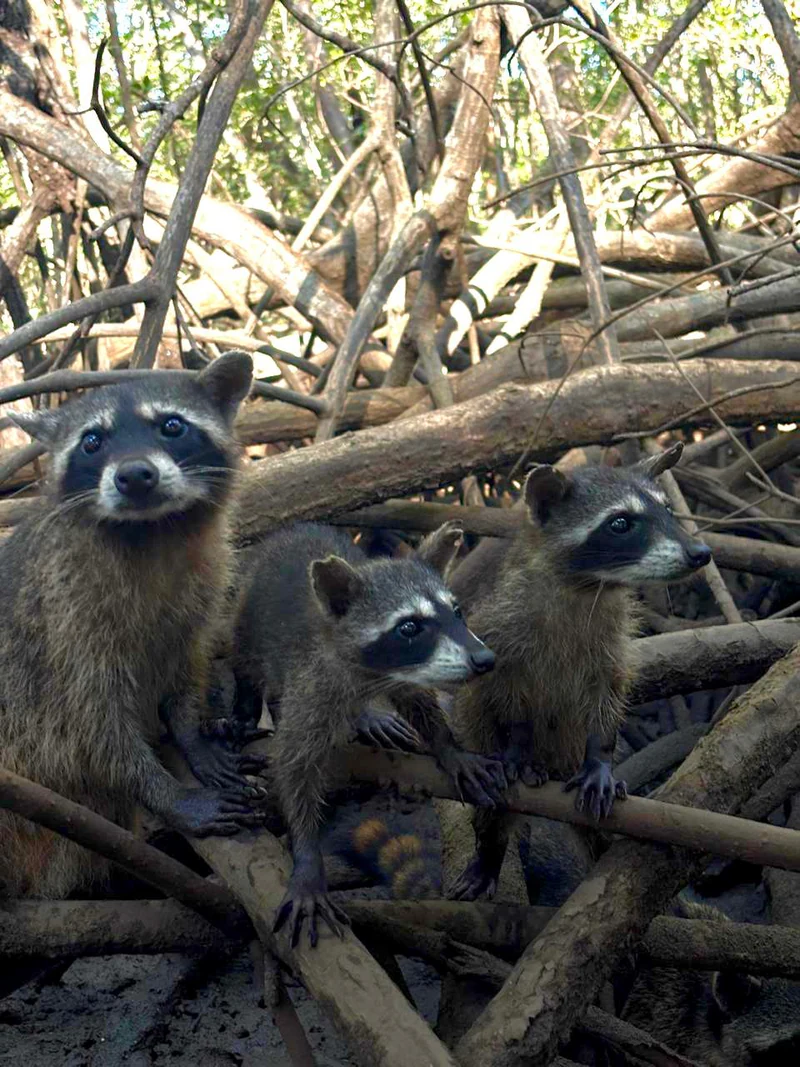
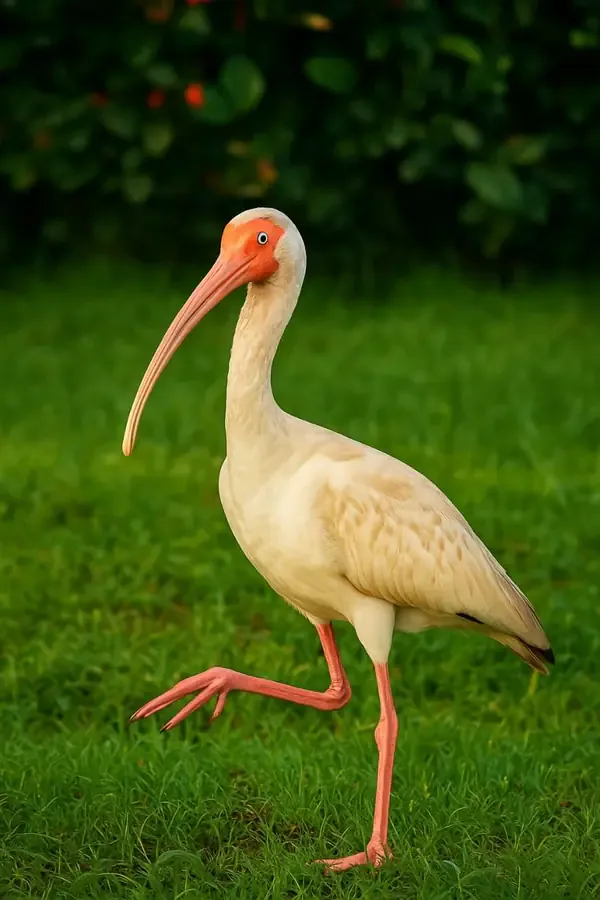
Crabs feed a lot of the animals people come to see. The yellow-crowned night heron leans heavily on crabs, which it catches with a lunge and shakes apart, Cornell notes. The white ibis pinches crabs out of the mud and removes their claws before eating them (Cornell). And the National Park Service lists herons, egrets and raccoons among the predators that fiddler crabs hide from.
How to watch them
- Scan the mud banks when they are exposed: hundreds of fiddler crabs can be out at once.
- Move slowly and quietly. At the first shadow or vibration, crabs drop into their burrows; wait a minute and they come back.
- Look up as well as down: tree-climbing crabs sit on roots, trunks and leaves.
- Watch, do not catch. Crabs are part of a protected wetland.
A fun fact
Two crabs that look almost identical, one in the Pacific and one in the Caribbean, have been separate species for up to 3.1 million years. The tree-climbing mangrove crab of Tamarindo only got its own name in 2014.
See them on a tour
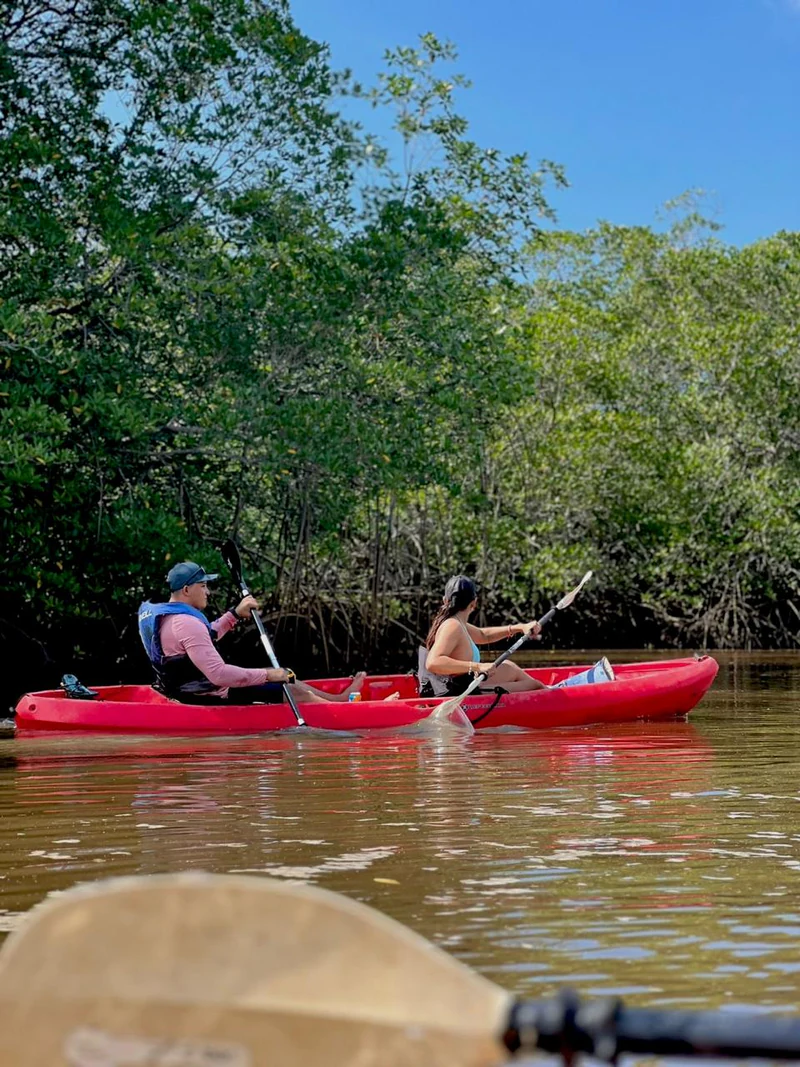
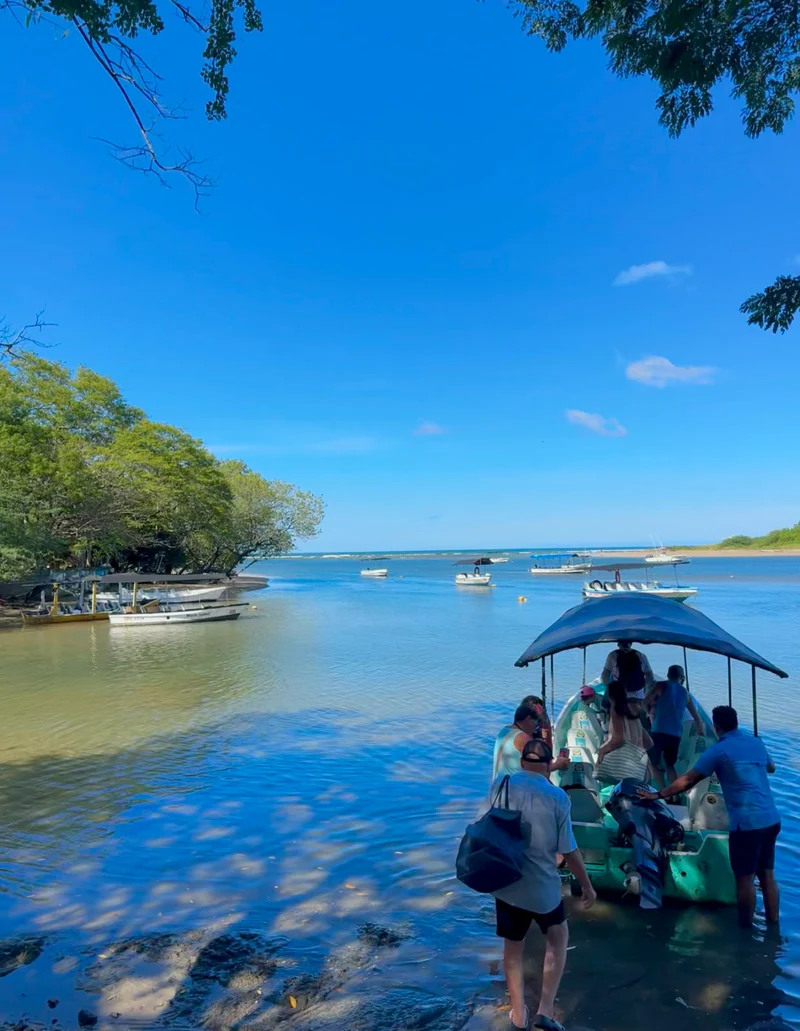
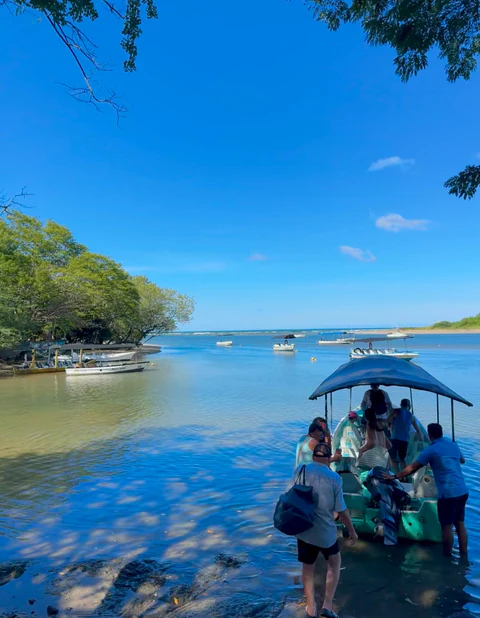
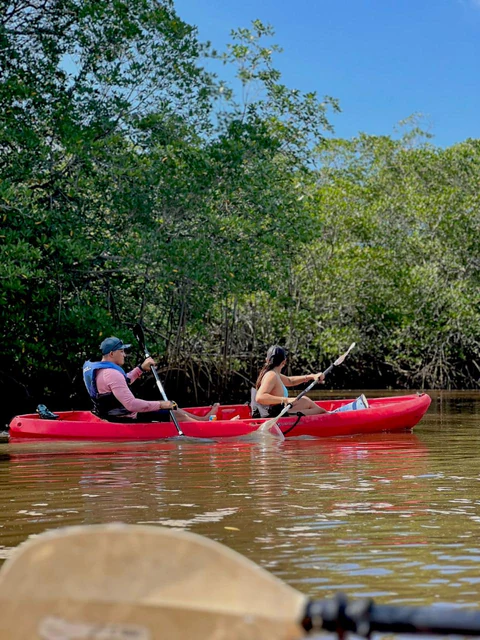
From a kayak you glide right along the roots and banks where crabs live: paddle the mangrove by kayak and ask your guide to point out the fiddlers and the tree crabs. The wildlife boat tour passes the same mud banks. Then meet the animals that eat them in the field guide.
Watch, don’t feed. In Costa Rica, feeding wildlife without SINAC authorization is fined under article 116 of the Wildlife Conservation Law (Ley 7317). On our tours, animals are watched from a distance.
Sources
- iNaturalist: crab observations within 5 km of the Tamarindo estuary
- Thiercelin & Schubart (2014). Transisthmian differentiation in the tree-climbing mangrove crab Aratus. Zootaxa 3793(5): 545–560
- Cannicci et al. (2008). Faunal impact on vegetation structure and ecosystem function in mangrove forests: a review. Aquatic Botany
- US National Park Service: Fiddler crab
- Cornell Lab, All About Birds: Yellow-crowned Night Heron
- Cornell Lab, All About Birds: White Ibis (life history)
- Ramsar Sites Information Service: Tamarindo (610)
Reviewed: November 19, 2026 · Valled Tours