Masked faces, ringed tails and hands that never stop exploring: raccoons are among the mammals people most often spot on the edge of the Tamarindo mangrove. What few visitors know is that two different species can live here.
Two raccoons in Costa Rica
Back in 1988, a study in the Revista de Biología Tropical summed it up: the northern raccoon (Procyon lotor) lives all over Costa Rica, while the crab-eating raccoon (Procyon cancrivorus) had been reported only in the southwest, near Panama. For decades the northern raccoon was the only one expected in Guanacaste.
That changed in 2026. A paper in Mammal Research reported the first confirmed crab-eating raccoons in the marine national park that protects this stretch of coast, managed by SINAC. Camera traps caught them repeatedly between 2021 and 2025: 70 independent detections, about 17.9% of all records. The researchers filmed adult females with cubs, a sign that the species breeds here, and found that crab-eating raccoons seemed to prefer garbage containers close to the mangrove.
On iNaturalist, observations within 5 km of the estuary mouth show the same picture: about fifty records of northern raccoons and a single one of the crab-eating raccoon (checked on 18 November 2026).
How to tell them apart
The Animal Diversity Web of the University of Michigan lists the differences:
| Feature | Northern raccoon | Crab-eating raccoon |
|---|---|---|
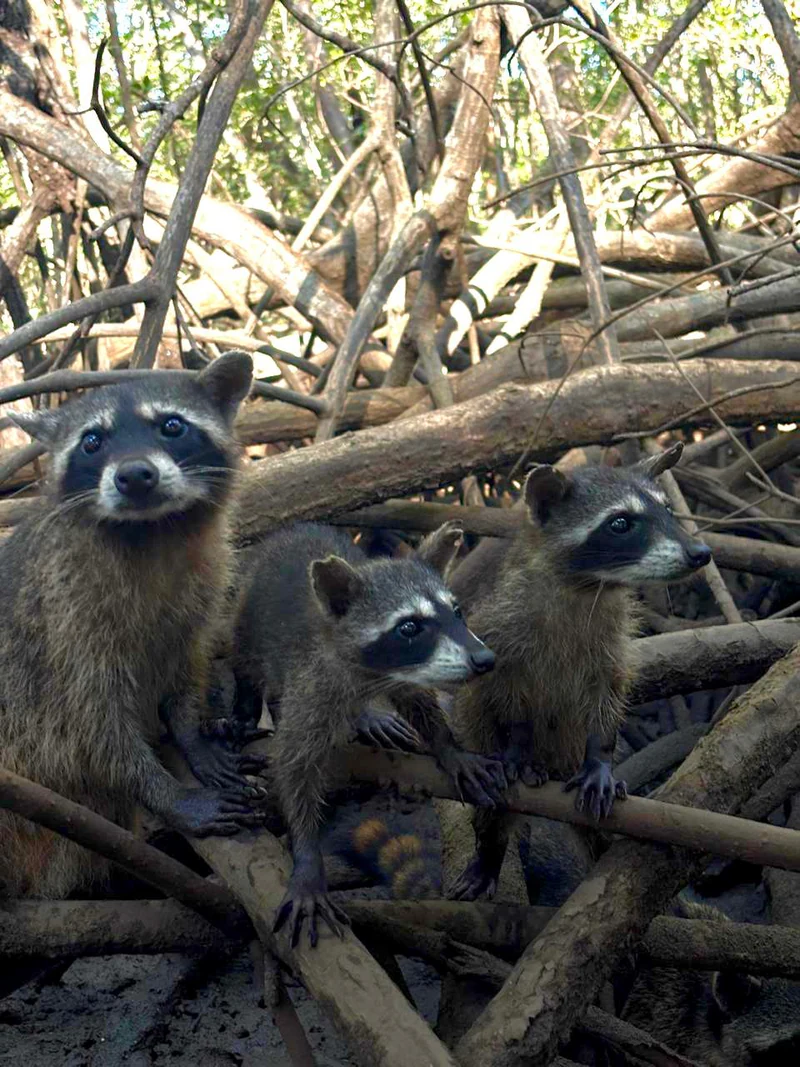
| Coat | Thick, grizzled gray to reddish brown | Short, without underfur; fairly even brown on the back, so it looks thinner |
| Mask | Black, reaching almost to the ears | Black, fading just behind the eyes |
| Legs and feet | Pale: white front legs, whitish-brown hind legs | Dark brown and slender |
| Neck fur | Normal direction | Slants forward, toward the head |
| Size | Larger and stockier | Smaller, 3–7 kg |
Source: Animal Diversity Web, accounts for Procyon cancrivorus and Procyon lotor.
In the field, look first at the legs and the mask. Dark, slim legs and a mask that stops behind the eyes point to the crab-eating raccoon.
Raccoons in the mangrove
Both species need water nearby. The crab-eating raccoon keeps close to swamps, lagoons and beaches, and eats fruit, crabs and other crustaceans, insects, fish and frogs. The northern raccoon is an opportunist that eats more invertebrates than vertebrates and has learned to use trash, according to the Animal Diversity Web.
In the dry forest of Santa Rosa, in northern Guanacaste, a camera-trap study published in Therya Notes in 2025 recorded northern raccoons most often in mangrove and beach forest, and found them active at night. In the Tamarindo estuary, look for them where the mangrove roots meet the mud, the same place where mangrove crabs live. As our photo shows, they sometimes forage there by day, but nothing guarantees a sighting.
Why you should never feed a raccoon
Raccoons are clever, and that is the problem. A 2026 study in the Journal of Wildlife Management filmed eight native species taking food from garbage containers in the protected area around the estuary, and northern raccoons made up 84% of the detections. Areas with more buildings had more wildlife at the bins.
The Colegio de Médicos Veterinarios de Costa Rica explains the harm:
- Fed animals become dependent on people and lose the ability to find their own food.
- Unsuitable food causes malnutrition, disease and poisoning.
- Close contact spreads bacterial, viral, fungal and parasitic diseases, in both directions.
- Animals that expect food can turn aggressive.
- Animals used to people are more likely to be hit by cars, electrocuted or attacked by dogs.
In Costa Rica, feeding wild animals without SINAC authorization is also fined under the Wildlife Conservation Law. Keep your snacks closed, never leave trash open, and enjoy them from a distance.
Conservation
Both raccoons are listed as Least Concern by the IUCN, according to the Mammal Diversity Database (northern, crab-eating). Their main risk here is not hunting but people: food handouts and open garbage.
A fun fact
A raccoon’s front paws look like slender human hands, with five toes, which makes it unusually dexterous, ADW notes. Watch one turning over leaves or probing between roots and you will see why it is so good at opening things.
See them on a tour
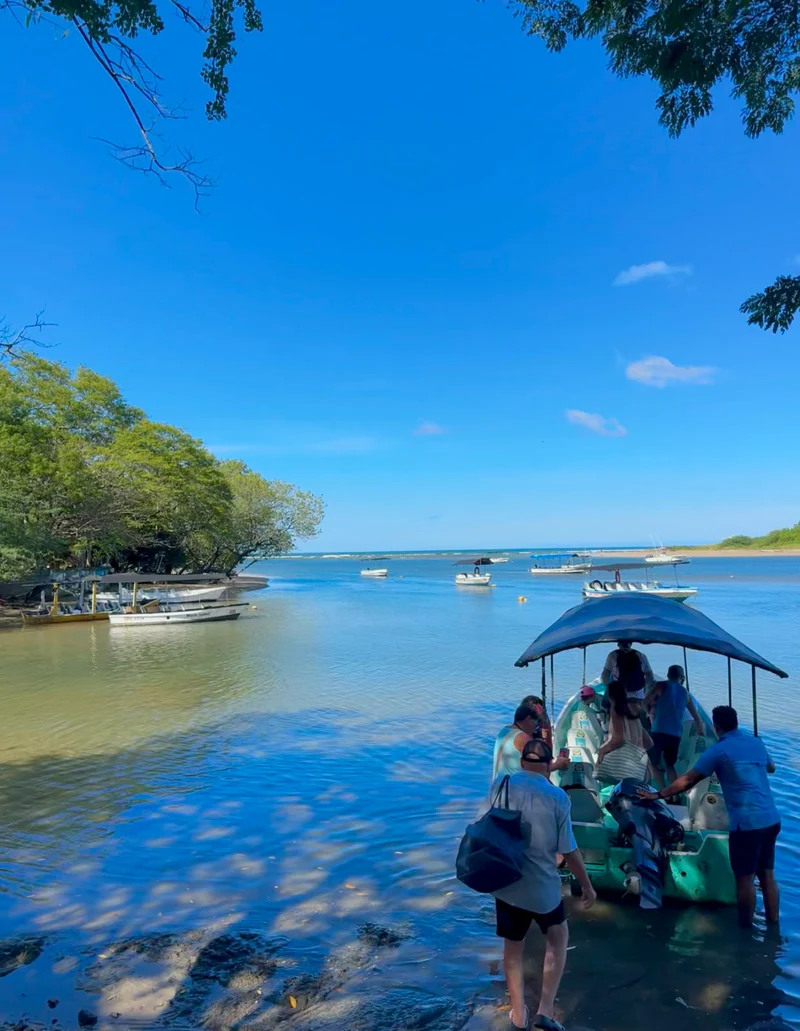
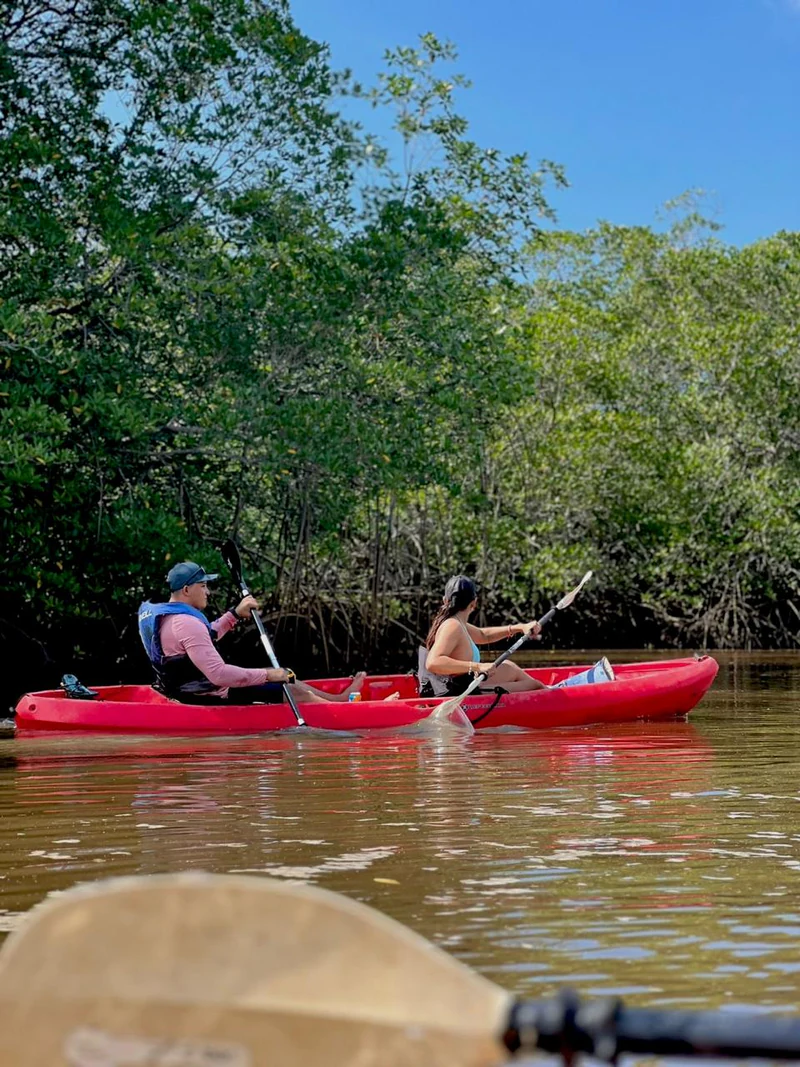
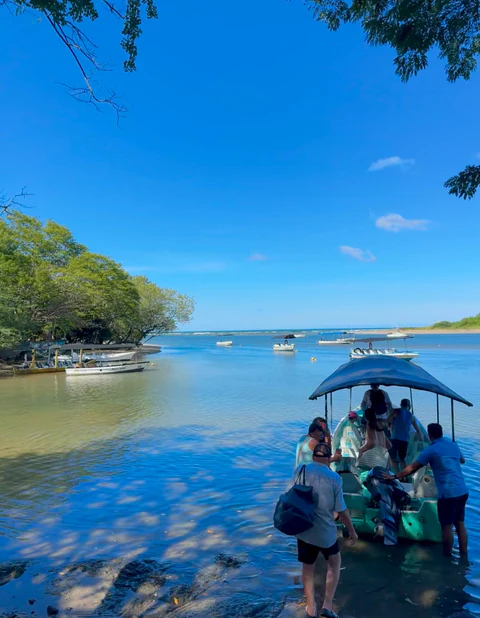
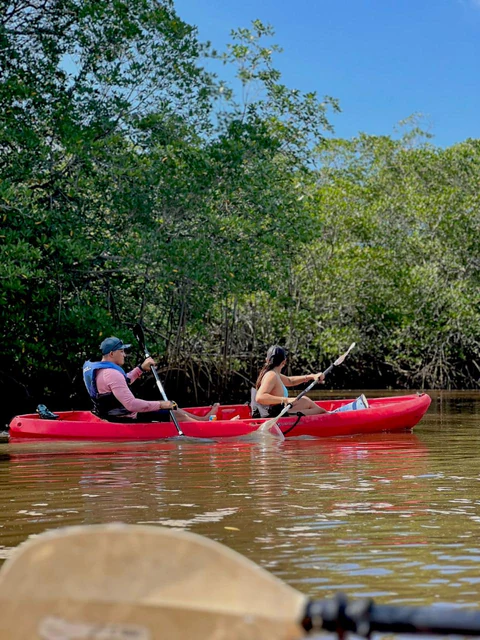
Our wildlife boat tour in the Tamarindo estuary runs along the mangrove edge where raccoons forage, and your bilingual guide can help you tell the two species apart. You can also paddle the mangrove by kayak. For the birds you will meet along the way, see the field guide.
Watch, don’t feed. In Costa Rica, feeding wildlife without SINAC authorization is fined under article 116 of the Wildlife Conservation Law (Ley 7317). On our tours, animals are watched from a distance.
Sources
- Mammal Research (2026), Cordero-Umaña, Santidrián Tomillo & Carrillo Jiménez: first confirmed record of the crab-eating raccoon in a marine national park in Guanacaste
- Cordero-Umaña et al. (2026). Indirect effects of fast-growing urban development on wildlife in a coastal protected area of Costa Rica. Journal of Wildlife Management
- Montalvo et al. (2025). Coexistence of northern raccoons and white-nosed coatis in a dry forest of northwest Costa Rica. Therya Notes
- Carrillo & Vaughan (1988). Revista de Biología Tropical 36(2B)
- Animal Diversity Web: Procyon cancrivorus
- Animal Diversity Web: Procyon lotor
- Mammal Diversity Database: Procyon lotor
- Mammal Diversity Database: Procyon cancrivorus
- iNaturalist: raccoon observations near the Tamarindo estuary
- El Observador: Colegio de Médicos Veterinarios asks not to feed wildlife (29 March 2025)
Reviewed: November 19, 2026 · Valled Tours