On eBird at the Tamarindo estuary
| Species | Months recorded | On checklists | Last record |
|---|---|---|---|
| White Ibis Eudocimus albus | Common | September 30, 2026 |
few records · regular · on many checklists. Source: eBird, hotspot Tamarindo, Guanacaste, Costa Rica (L442998), checked on November 18, 2026. What you see depends on the tide, the season and the animals.
Herons wait. Ibises walk. A small group of white ibises moves slowly across the mud with heads down, poking the long curved bill into the ground again and again. They are looking for food they cannot see: they find it by touch.
How to recognize it
- Shape: a large wading bird with a football-shaped body, long legs and a long neck. Cornell puts it between the cattle egret and the great egret in size.
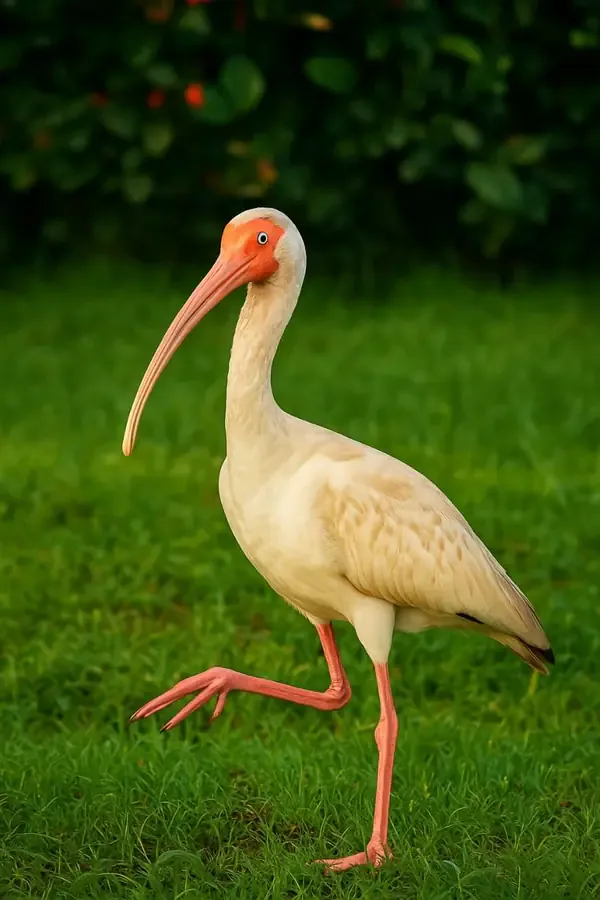
- Bill: long and curved downward. In adults it is reddish pink, like the bare skin around the pale blue eye and the legs.
- Color: almost all white. The black wingtips usually show only when it flies.
- Young birds: brown above, white below, with a streaky brown neck and an orange-pink bill. In their first summer they look patchy brown and white while they molt.
- In flight: neck stretched out straight and feet trailing behind. It alternates quick wingbeats with glides, often in lines or loose flocks.
Ibis or heron?
From a distance, a white ibis can be mistaken for one of the white egrets. Three clues settle it:
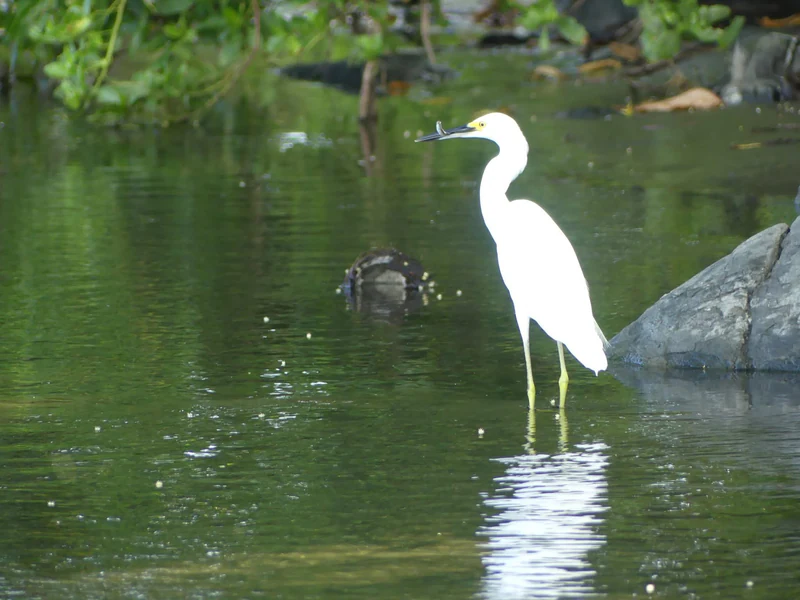
- The bill: curved and red in the ibis; straight and yellow or black in the great egret and the snowy egret.
- How it hunts: the ibis walks and probes, keeping its bill in the mud. Egrets stand still or stalk, and strike at fish they can see.
- In flight: the ibis keeps its neck straight out. Herons and egrets usually fold the neck back into an S.
Two other birds with curved bills turn up at the hotspot. The wood stork is much larger, with a bare dark head and black flight feathers; eBird rates it occasional here. The glossy ibis, dark and glossy, is rare, with records in only four weeks. For the herons, see our guide to the herons and egrets of Costa Rica.
Feeding by touch
The Cornell Lab explains that white ibises push the bill into soft, muddy bottoms and feel for prey. When they touch something, they pinch it like tweezers and pull out crabs, worms and crayfish. They also take fish, frogs, lizards and snails. Hard crustaceans get broken with the bill, crabs lose their claws before being swallowed, and very muddy items are carried off and washed first.
They usually forage in water less than about 20 cm (8 inches) deep, with short, sparse plants. That is why you see them on the open mud along the channels, often next to whimbrels and other shorebirds, and also on wet lawns.
When to see it in Tamarindo
At the Tamarindo eBird hotspot, at the mouth of the estuary, the white ibis is common: it has records in all 48 weeks of the year, and the weekly bars are widest from June to August. As of 18 November 2026, the latest report is from 30 September 2026. Even a common bird is never guaranteed: what you see depends on the tide, the season and the animals.
There is a reason ibises move between salt and fresh water. Cornell notes that chicks cannot safely eat large amounts of salt, so in the nesting season adults forage more in freshwater wetlands, and outside it they use coastal wetlands more often.
Conservation
BirdLife International lists the white ibis as Least Concern. It estimates 210,000 to 360,000 mature individuals and considers the population stable in Central and South America. Like every wading bird, it depends on wetlands: changes in water levels affect where it can feed and nest.
Fun facts
- White ibis chicks hatch with straight bills. The bill starts to curve down at about 14 days old, Cornell reports.
- The oldest known white ibis was at least 16 years and 4 months old.
- Males guard the nest so that other ibises do not steal its sticks.
See it on a tour
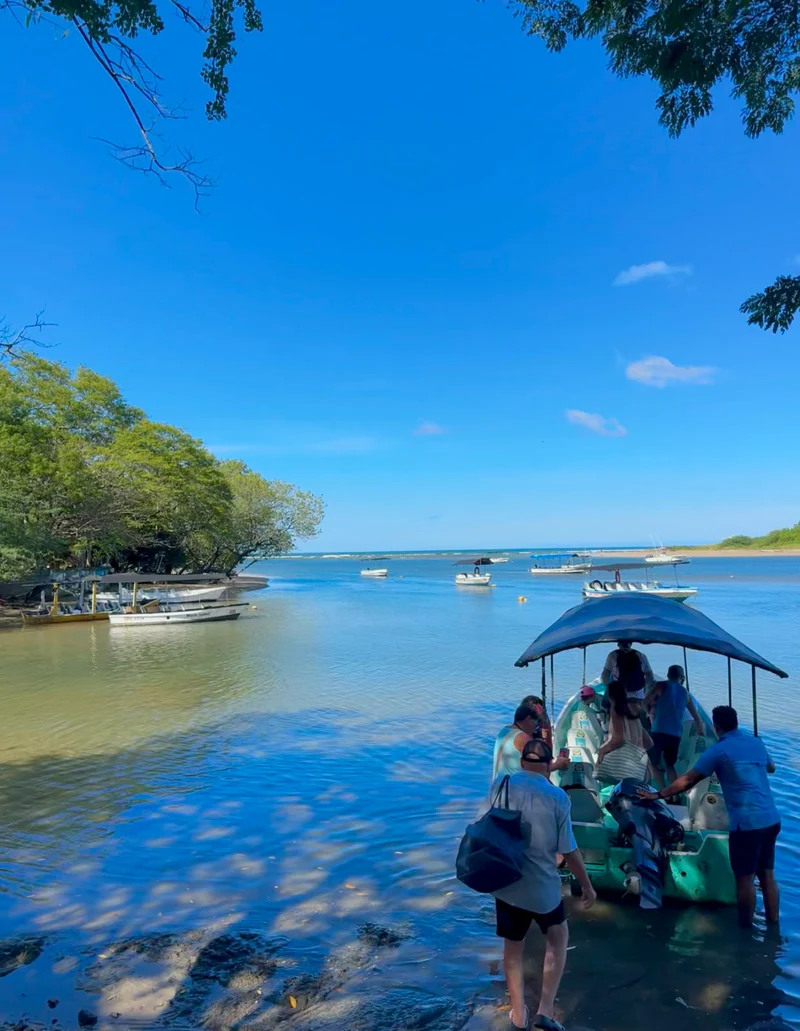
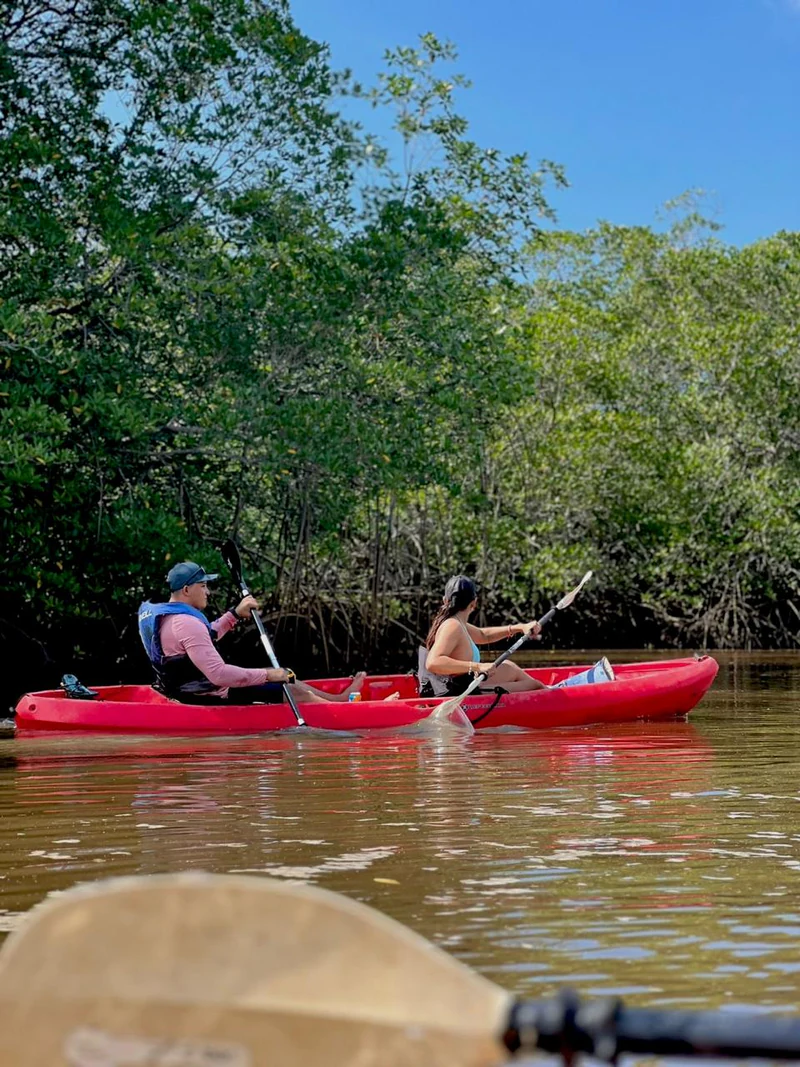
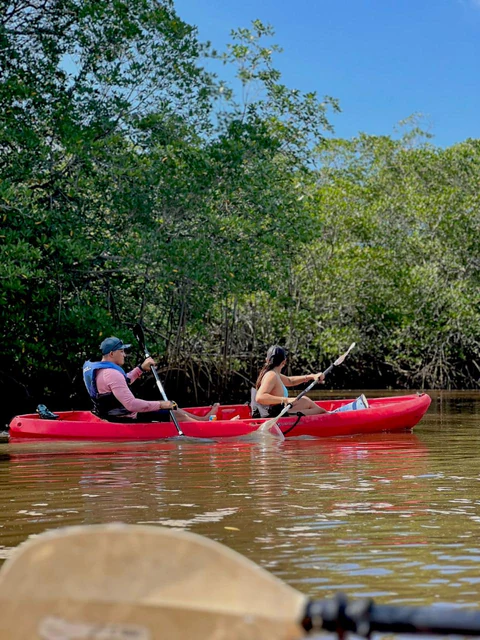
Ibises feed on the mud banks that our wildlife boat tour in the Tamarindo estuary passes, and a quiet kayak through the mangrove lets you watch them probe up close. Want more birds? Read about the tricolored heron, check the Tamarindo bird checklist or browse the field guide.
Watch, don’t feed. In Costa Rica, feeding wildlife without SINAC authorization is fined under article 116 of the Wildlife Conservation Law (Ley 7317). On our tours, animals are watched from a distance.
Sources
- Cornell Lab, All About Birds: White Ibis (overview)
- Cornell Lab, All About Birds: White Ibis (identification)
- Cornell Lab, All About Birds: White Ibis (life history)
- BirdLife DataZone: White Ibis (Eudocimus albus)
- AOCR: Lista Oficial de las Aves de Costa Rica
- eBird: Tamarindo hotspot (L442998)
- eBird: bar charts for the Tamarindo hotspot
Reviewed: November 19, 2026 · Valled Tours