On eBird at the Tamarindo estuary
| Species | Months recorded | On checklists | Last record |
|---|---|---|---|
| Osprey Pandion haliaetus | Frequent | October 26, 2026 |
few records · regular · on many checklists. Source: eBird, hotspot Tamarindo, Guanacaste, Costa Rica (L442998), checked on November 18, 2026. What you see depends on the tide, the season and the animals.
Many visitors call it the «fishing eagle». It is not an eagle at all: the osprey is the only living species in its own family, the Pandionidae, and it eats almost nothing but fish. Watching one hunt over the estuary is one of the best shows of the winter months.
How to recognize it
- Size: a large raptor, 54 to 58 cm long, with a wingspan of 1.5 to 1.8 m, according to the Audubon field guide.
- Colors: dark brown back, white underparts and a black stripe through the eye. Under the wings, look for black patches at the wrist.
- In flight: long, narrow wings held slightly above horizontal with a clear bend at the wrist. From a distance it can look more like a big gull than a hawk.
- Young birds: pale scaling on the back.
- With a catch: it carries the fish head-forward, like a torpedo.
How it fishes
The osprey flies slowly over open water and often hovers when it spots a fish. Wikipedia notes that it first sights prey from 10 to 40 m above the surface. If the fish is close enough to the top, it plunges feet-first and grabs it with its talons, often disappearing completely under the water, then rises heavily from the water.
Its body is built for the job:
- Reversible outer toes: ospreys and owls are the only raptors that can turn the outer toe backwards, so the osprey holds a slippery fish with two toes in front and two behind.
- Spiny soles: sharp spicules under the toes help grip the fish.
- Closable nostrils: they keep water out during the dive.
Its diet is almost entirely fish, usually 10 to 30 cm long, and Audubon says it only rarely takes small mammals, birds or reptiles when fish are scarce. The mouth of the Tamarindo estuary, where the river meets the sea, gives it shallow water and a good view.
When to see it in Tamarindo
The official list of the birds of Costa Rica classifies the osprey as a migrant. Ospreys from the United States and Canada fly south for the northern winter, and Wikipedia notes that many spend it in South America, so Costa Rica is both a wintering ground and a highway.
The eBird data match that pattern. At the Tamarindo eBird hotspot the osprey is frequent, with records in 32 of the 48 weeks of the year. They are steady from mid-October to the third week of April, scattered and thin from May to July, and absent in August. As of 18 November 2026 the latest report is from 26 October 2026.
Why a few in summer? Young ospreys do not fly north right away: a U.S. Geological Survey study found that ospreys do not return to the United States as one-year-olds. Some of the birds seen in Tamarindo between May and July may be these young birds spending their first northern summer in the tropics. Even in the best months, a sighting depends on the tide, the season and the bird.
A conservation success
Ospreys were seriously harmed by pesticides in the mid-20th century. Audubon explains that after DDT and related pesticides were banned in 1972, ospreys recovered well across much of North America. Today the species is listed as Least Concern by the IUCN, with a population of about 1.2 million.
A fun fact
The osprey lives almost everywhere. Wikipedia calls it one of only six land birds with a worldwide distribution: it is found on every continent except Antarctica.
See it on a tour
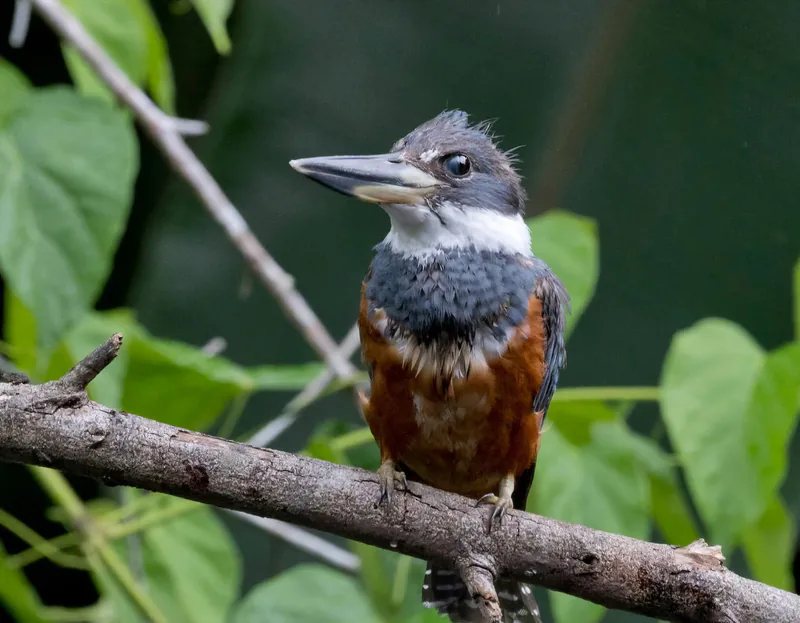
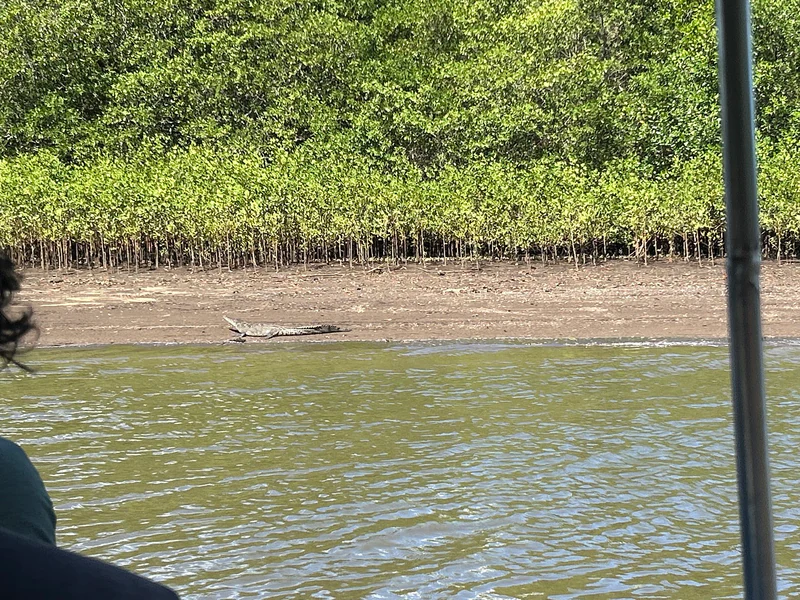
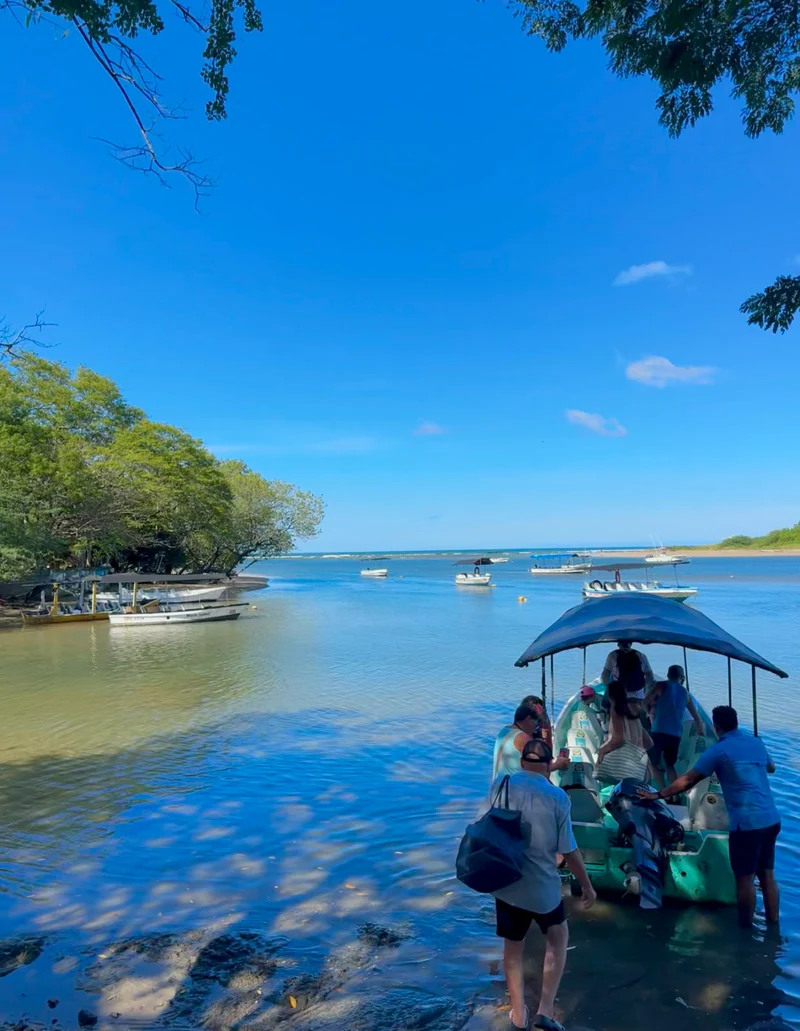
The osprey hunts over open water, so the wildlife boat tour in the Tamarindo estuary gives you a wide view of the river mouth. It is also on the list of our bird watching tour in Tamarindo. For more fish-eaters, meet the kingfishers and the magnificent frigatebird, or check the migrant calendar in our Costa Rica bird migration guide.
Watch, don’t feed. In Costa Rica, feeding wildlife without SINAC authorization is fined under article 116 of the Wildlife Conservation Law (Ley 7317). On our tours, animals are watched from a distance.
Sources
- Audubon Field Guide: Osprey
- Wikipedia: Osprey
- U.S. Geological Survey: Migration patterns and wintering localities of American ospreys
- AOCR: Lista Oficial de las Aves de Costa Rica
- eBird: Tamarindo hotspot (L442998)
- eBird: bar charts for the Tamarindo hotspot
Reviewed: November 19, 2026 · Valled Tours