On eBird at the Tamarindo estuary
| Species | Months recorded | On checklists | Last record |
|---|---|---|---|
| Tricolored Heron Egretta tricolor | Common | November 16, 2026 |
few records · regular · on many checklists. Source: eBird, hotspot Tamarindo, Guanacaste, Costa Rica (L442998), checked on November 18, 2026. What you see depends on the tide, the season and the animals.
If you see a slender, dark heron wading belly-deep in the estuary and its underside flashes white, you are probably looking at a tricolored heron. It is the easiest of the dark herons to name once you know the trick: look at the belly.
How to recognize it
The Audubon field guide describes a medium-sized heron, 58 to 66 cm long, so slender that it looks longer-billed and longer-necked than most herons. Check these marks:
- Upperparts: dark blue-gray on the back, wings and most of the neck, with lavender tones on adults.
- White: a clean white belly and a white stripe running up the front of the neck.
- Bill and face: the base of the bill and the bare skin of the face are yellowish most of the year and turn bright blue in the breeding season.
- Breeding adults: long, blue, hair-like plumes on the head and neck, and legs that turn pink, according to Wikipedia’s species account.
- Young birds: reddish brown on the neck instead of blue, with reddish-brown marks on the wings.
Its old English name was the Louisiana heron, which you may still find in older field guides.
Look-alikes in the estuary
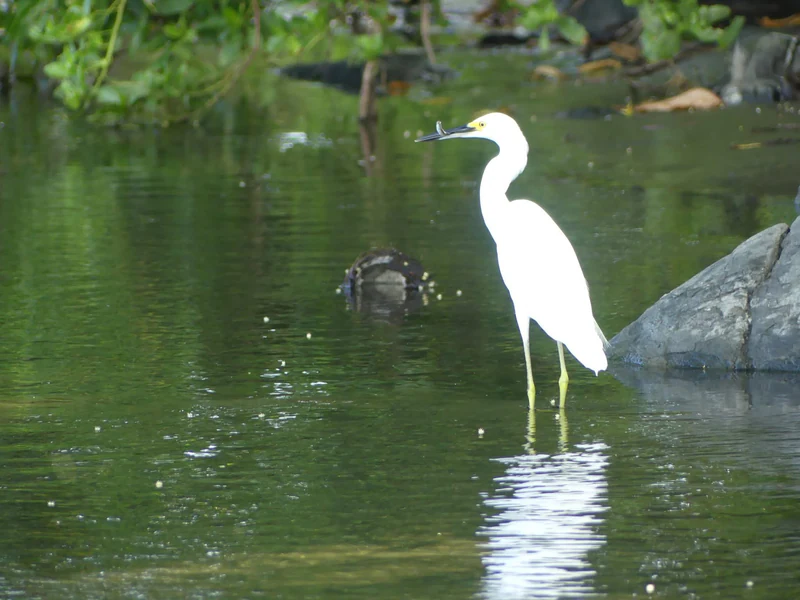
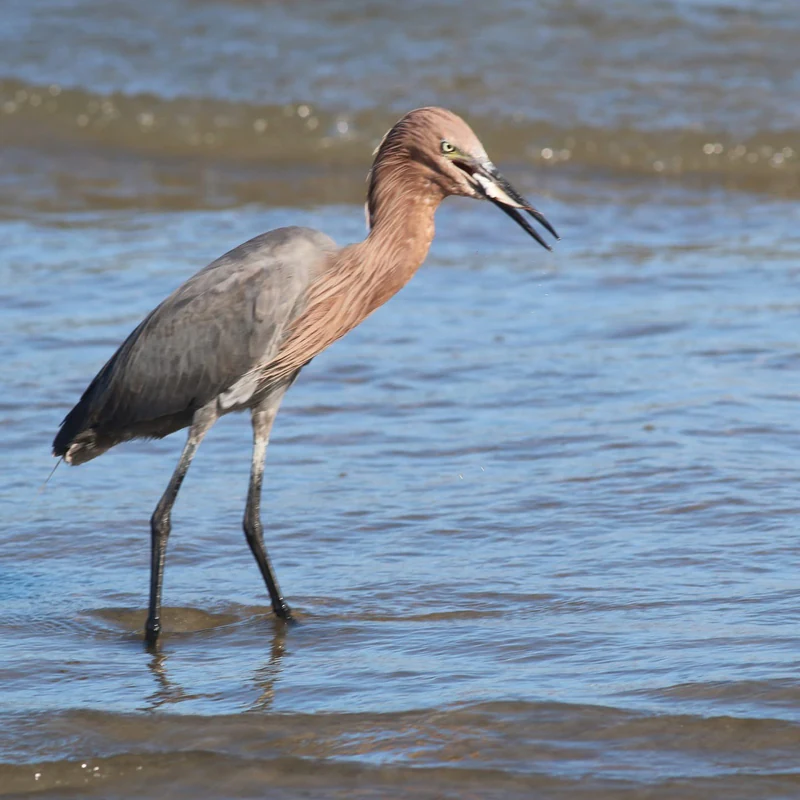
Three other herons in Tamarindo can look dark from a distance. The white belly settles it every time:
- Little blue heron: adults are dark all over, slaty blue with a purple-maroon head and neck, and have no white belly. The bill is pale blue with a black tip.
- Reddish egret: bulkier, with a shaggy pinkish-cinnamon head and neck and a pink bill with a black tip. See our page on the reddish egret.
- Great blue heron: much larger (up to 137 cm), blue-gray, with a black stripe over the eye and a thick bill.
Our guide to the herons and egrets of Costa Rica has a full comparison table for the estuary herons.
How it hunts
The tricolored heron usually hunts the patient way: it stands still until prey comes close, or walks very slowly through shallow water. Audubon adds that it can be more active, stirring the bottom with one foot to flush prey or dashing after schools of small fish. It forages alone and chases other birds away from its small feeding territory.
Its menu is mostly small fish, plus crustaceans, insects, tadpoles and frogs. A study in Florida cited by Wikipedia found that tricolored herons there ate 99.7% fish and prawns.
Where and when to see it in Tamarindo
Audubon says that in the breeding season it lives mostly near salt water, in shallow sheltered estuaries and bays, tidal marshes and mangrove swamps. That is a good description of the Tamarindo estuary, which the Ramsar file for the site describes as mostly mangrove. Scan the shallow edges of the channel and the mud banks, where it often wades deeper than other small herons.
At the Tamarindo eBird hotspot, which covers the mouth of the estuary, the beach and the edge of town, the tricolored heron is common: it shows up in 46 of the 48 weeks of the year, with records in every month. As of 18 November 2026 the latest report is from 16 November 2026. It is still a wild bird, so it is never guaranteed: what you see depends on the tide, the season and the bird.
In Costa Rica it is both a resident and a migrant. The official list of the birds of Costa Rica marks it with both codes, and the heron catalog of the Museo Nacional de Costa Rica lists it as resident-migratory, from sea level up to 1,500 m, breeding in the rainy season.
Is it in trouble?
Not globally. Audubon gives its IUCN status as Least Concern, with a population of about 190,000, and notes that its range expanded north during the 20th century. The Museo Nacional also lists it as Least Concern in Costa Rica. Like every heron, it depends on healthy wetlands, so a quiet approach and some distance help it keep feeding.
A fun fact
Tricolored herons travel. Audubon reports that birds banded in South Carolina, in the United States, were later found in Cuba and Panama.
See it on a tour
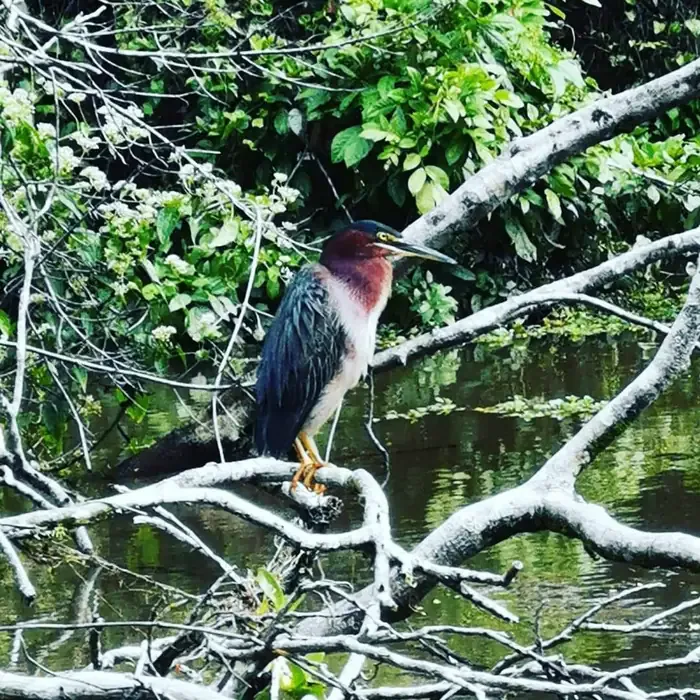
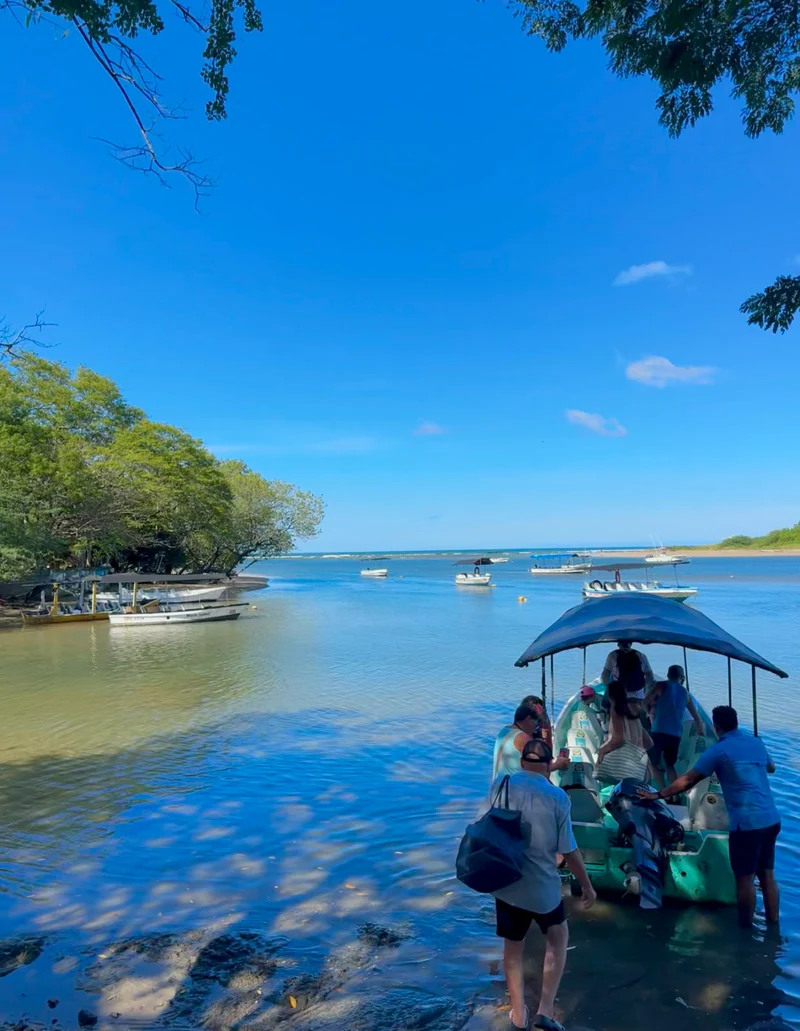
The tricolored heron is one of the birds we look for on our bird watching tour in Tamarindo, and it is often in view from the wildlife boat tour in the Tamarindo estuary. To keep learning, compare it with the green heron or browse the Tamarindo bird checklist.
Watch, don’t feed. In Costa Rica, feeding wildlife without SINAC authorization is fined under article 116 of the Wildlife Conservation Law (Ley 7317). On our tours, animals are watched from a distance.
Sources
- Audubon Field Guide: Tricolored Heron
- Wikipedia: Tricolored heron
- AOCR: Lista Oficial de las Aves de Costa Rica
- Museo Nacional de Costa Rica: Catálogo de Especies de Garzas de Costa Rica
- Ramsar Sites Information Service: Tamarindo (610)
- eBird: Tamarindo hotspot (L442998)
- eBird: bar charts for the Tamarindo hotspot
Reviewed: November 19, 2026 · Valled Tours