On eBird at the Tamarindo estuary
| Species | Months recorded | On checklists | Last record |
|---|---|---|---|
| Mangrove Swallow Tachycineta albilinea | Common | October 11, 2026 | |
| Mangrove Yellow Warbler Setophaga petechia | Occasional | August 21, 2026 | |
| Mangrove Vireo Vireo pallens | Rare | April 28, 2025 | |
| Mangrove Cuckoo Coccyzus minor | Rare | February 10, 2025 | |
| Mangrove Hummingbird Chrysuronia boucardi | Rare | March 13, 2019 |
few records · regular · on many checklists. Source: eBird, hotspot Tamarindo, Guanacaste, Costa Rica (L442998), checked on November 18, 2026. What you see depends on the tide, the season and the animals.
The five at a glance
The Tamarindo estuary is mostly mangrove, and the eBird hotspot for Tamarindo, at the estuary mouth, lists five birds named for it. Frequency labels are our own reading of eBird’s weekly bars (see the Tamarindo bird checklist for the rule). Spanish names and status come from the official list of the birds of Costa Rica (AOCR, June 2026).
| Species | Look for | Status in Costa Rica (AOCR) | In Tamarindo (eBird) |
|---|---|---|---|
| Mangrove Swallow (Tachycineta albilinea) | Small swallow, dark glossy back, white rump, low over the water | Resident | Common; 46 of 48 weeks; last 11 Oct 2026 |
| Mangrove Yellow Warbler (Setophaga petechia) | Bright yellow warbler; males with a rufous head | Resident | Occasional; 25 weeks; last 21 Aug 2026 |
| Mangrove Vireo (Vireo pallens) | Small vireo foraging low in the mangrove, alone or in pairs | Resident | Rare; 3 weeks; last 28 Apr 2025 |
| Mangrove Cuckoo (Coccyzus minor) | Long-tailed cuckoo with a dark mask and buffy belly | Uncertain resident and migrant | Rare; 6 weeks, December to April; last 10 Feb 2025 |
| Mangrove Hummingbird (Chrysuronia boucardi) | Green and bronze hummingbird, white belly, forked tail | Resident, endemic | Rare; 2 weeks; last 13 Mar 2019 |
eBird data for the Tamarindo hotspot, consulted 18 November 2026. Rare means fewer than 8 weeks with records in all years: a lucky find, not a target.
Mangrove Swallow: the one you will see
If one mangrove bird is close to a sure thing, it is this small swallow skimming the channel for insects. Birds of the World describes it as a common resident from Mexico to Panama, mostly along the coast, always near water. Its back is nearly black with a green-blue gloss (more steel-blue in worn feathers), the underparts are white with a gray wash, and the rump is white. A thin white line between the eye and the bill separates it from other white-rumped swallows.
Pairs nest in crevices of partly submerged snags and logs, and defend them hard. At the hotspot it is on checklists in 46 of 48 weeks, so watch for it perched on dead branches over the water, or flying low just ahead of the boat or kayak.
Mangrove Yellow Warbler: new name, same bird
Until 2025, eBird treated the yellow warblers of the Americas as one species. Its 2025 taxonomy update split them in two: the Northern Yellow Warbler (Setophaga aestiva), which breeds in Canada and the United States and migrates south, and the Mangrove Yellow Warbler (Setophaga petechia), which lives in coastal mangroves all year. Other authorities name them Yellow Warbler and Mangrove Warbler, as Audubon explains.
Both are on the Tamarindo list, and they follow opposite calendars. The northern bird has records from September to April and none from May to August, the pattern of a migrant. The mangrove bird has records in most months, including June and July. A male with a rufous head is the resident one: Wikipedia notes that, apart from the male’s rufous hood, its subspecies look very similar, and lists one on the Pacific coast from western Guatemala to Costa Rica. Females and young birds of both species are harder to tell apart.
Mangrove Vireo and Mangrove Cuckoo: hard to find
On the Pacific side of Central America, the Mangrove Vireo lives only in mangrove forest, foraging low, alone or in pairs (Birds of the World). Some of its subspecies come in two color morphs, yellow and gray. It is small and quiet, so it is easy to overlook. The hotspot has records in just three weeks, the latest on 28 April 2025.
The Mangrove Cuckoo is even more secretive. Birds of the World says its natural history remains almost a complete mystery: it sits still in the canopy for long periods, and often walks from branch to branch instead of flying. Cornell describes it as a large, lanky bird with a long tail, brown above and buffy below, with a dark mask and a bold black-and-white pattern under the tail. In Tamarindo it has records only from December to April, the last on 10 February 2025. Despite its name, it also lives in other lowland woodland, not only in mangroves.
Mangrove Hummingbird: Costa Rica’s own
The Mangrove Hummingbird is endemic to the Pacific coast of Costa Rica, where it lives almost only in mangroves (Birds of the World). The male has a bluish-green throat and chest, a white belly and a forked tail, with a bronze tinge on the rump; the bill is dark with a reddish lower half. The female has mostly white underparts with small green spots.
It is listed as Endangered by the IUCN, with an estimated 1,500 to 7,000 mature individuals and a decreasing population (BirdLife International, via Wikipedia). In Tamarindo it is a rare record: two weeks in the eBird archive, the latest on 13 March 2019. It shows how much a healthy mangrove matters, but no tour here can promise it.
Why the mangrove matters to these birds
The Tamarindo mangrove is a Ramsar wetland of international importance, inside a marine national park managed by SINAC (Tempisque Conservation Area). Our guide to the Tamarindo wildlife refuge explains its history, and the Costa Rica bird migration guide shows which northern birds join the residents from September to April.
See them on a tour
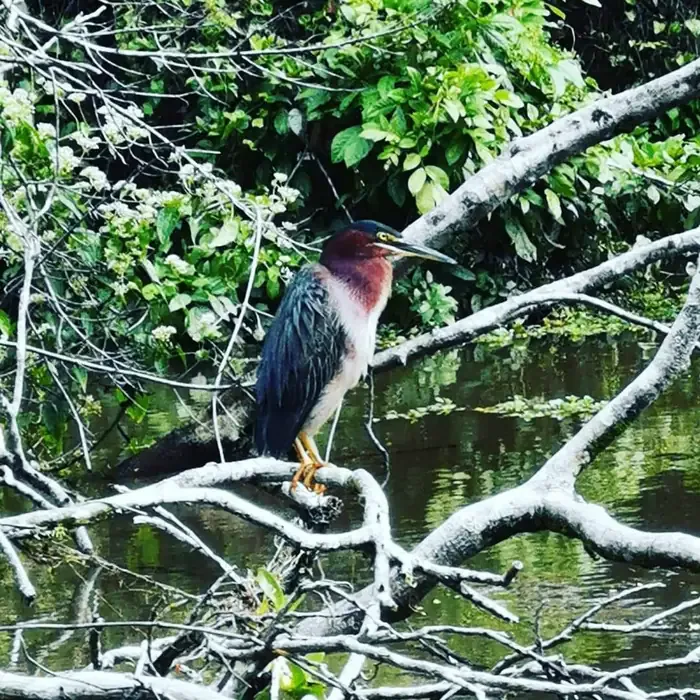
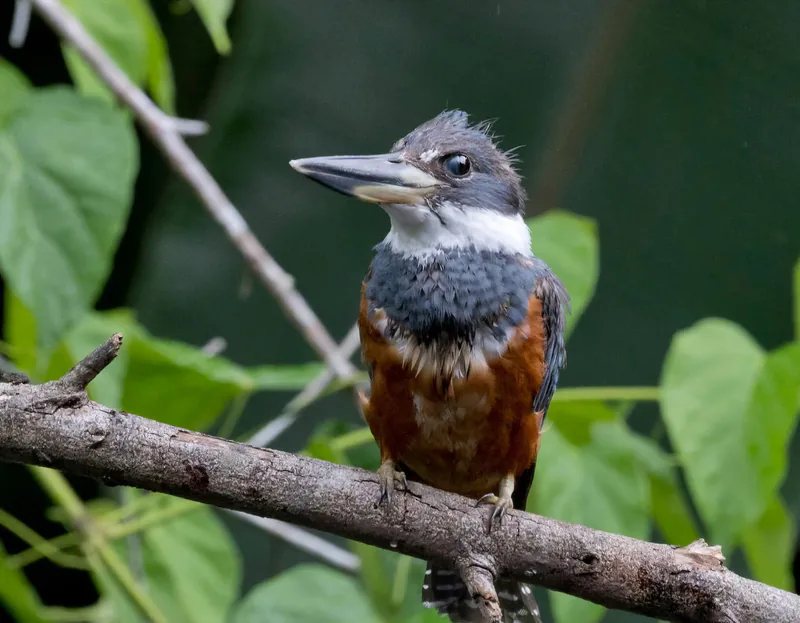
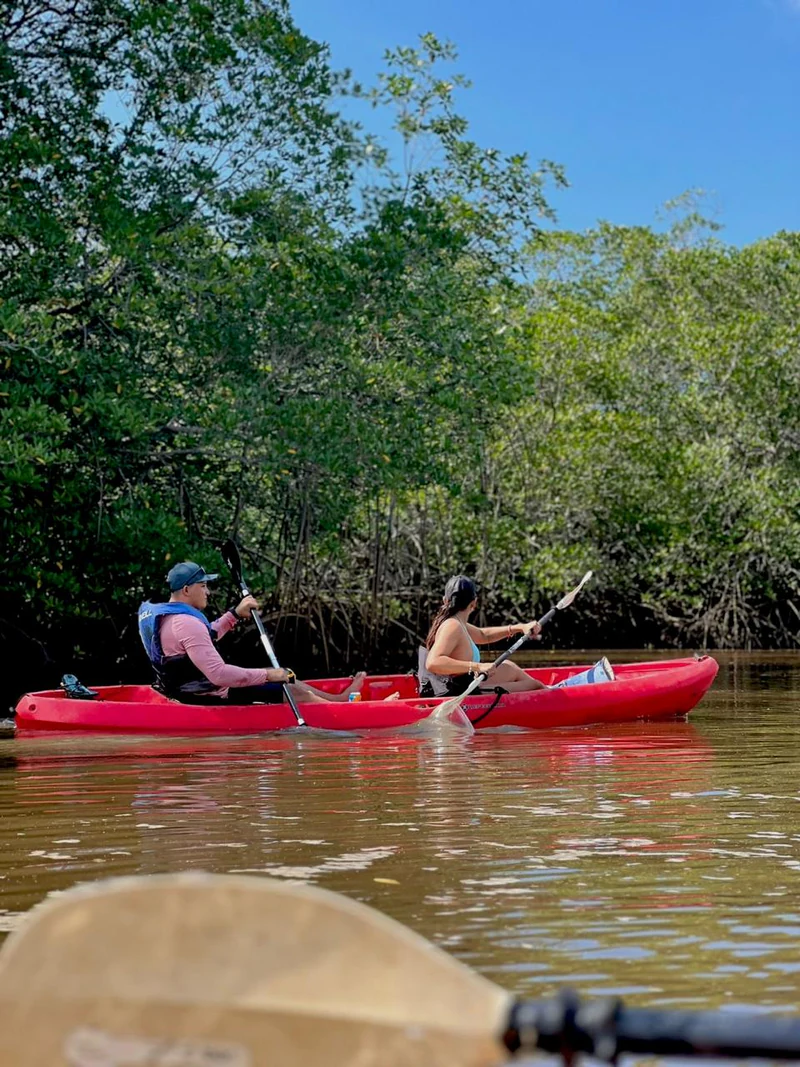
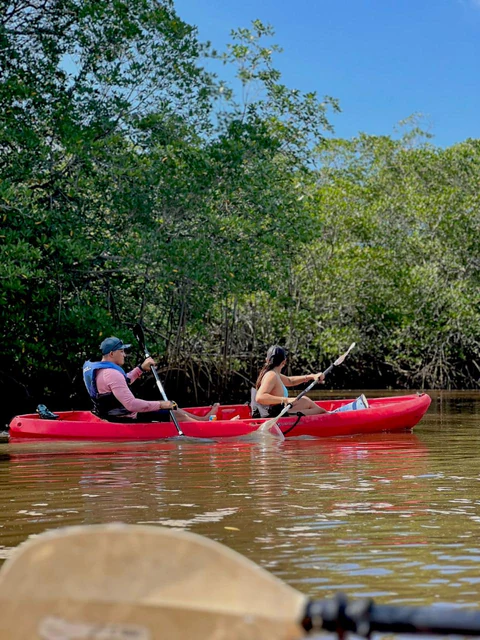
Small mangrove birds reward a slow, quiet approach. Paddle the mangrove by kayak to follow the edge of the roots, or ask for the bird watching tour in Tamarindo when you book. Two more mangrove hunters to look for: the green heron and the kingfishers.
Watch, don’t feed. In Costa Rica, feeding wildlife without SINAC authorization is fined under article 116 of the Wildlife Conservation Law (Ley 7317). On our tours, animals are watched from a distance.
Sources
- Birds of the World: Mangrove Swallow (introduction)
- Birds of the World: Mangrove Vireo (introduction)
- Birds of the World: Mangrove Cuckoo (introduction)
- Cornell Lab, All About Birds: Mangrove Cuckoo (identification)
- Birds of the World: Mangrove Hummingbird (introduction)
- Wikipedia: Mangrove hummingbird (IUCN status, BirdLife International)
- Wikipedia: Mangrove warbler
- eBird: 2025 eBird Taxonomy Update
- Audubon: This year’s bird name updates and species splits
- AOCR: Lista Oficial de las Aves de Costa Rica (update June 2026)
- eBird: Tamarindo hotspot (L442998)
- eBird: bar charts for the Tamarindo hotspot
Reviewed: November 19, 2026 · Valled Tours