The short answer
If you want to watch animals behaving naturally, hunting, resting and moving through their own habitat, go where they live: a wetland, a forest or a national park, with a guide who knows where to look. If you want to learn about rescue and rehabilitation and support that work, choose a facility that follows the rules described below.
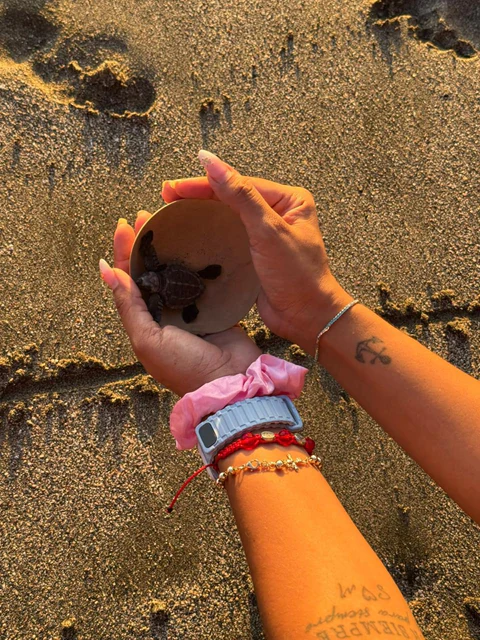
What you should avoid, in either case, is any place or tour that lets you hold, touch or feed wild animals, or that promises close contact for a photo. In Costa Rica that is not only bad for the animals: much of it is against the rules.
What Costa Rican law calls a rescue center, a zoo or a sanctuary
Captive wildlife in Costa Rica is governed by the Wildlife Conservation Law (Ley 7317) and its regulation, Executive Decree 40548-MINAE, which has been in force since August 2017. SINAC, the national system of conservation areas, issues the permits and inspects the sites. When the regulation was signed, La Nación summarized how it sorts the different places that keep wild animals:
| Type of site | What it is for | Can the public visit? |
|---|---|---|
| Rescue center | Nonprofit care of injured, rescued and confiscated animals, with the goal of releasing them | No. It must be closed to the public to avoid contact with people, and it cannot keep animals on display |
| Zoo | Environmental education by exhibiting animals, including animals that cannot be released because of their physical condition or behavior | Yes, with a SINAC permit |
| Sanctuary-type zoo | Exhibits only animals that come from rescues or confiscations, with a formal declaration that they cannot be released; it may not buy, sell or exchange wildlife | Yes, with a SINAC permit |
Source: La Nación, 3 August 2017, on the regulation of Ley 7317 (Decree 40548-MINAE). A site that works as a rescue center but exhibits animals and receives visitors must also register as a zoo.
Two more rules from that regulation are worth knowing as a visitor. Neither zoos nor sanctuaries may breed the animals they keep; both need a contraception plan. And animals considered for release must first pass health checks, so that they do not carry diseases back to wild populations.
In other words, the place you can visit is, legally, some kind of zoo. A true rescue center, the kind focused on returning animals to the wild, is by design a place tourists do not walk through.
Rules change. In October 2025 the Environment Ministry opened public consultation on a new wildlife regulation that would replace Decree 40548-MINAE, according to Delfino. Check the SINAC website for the rules in force when you travel.
How to recognize a responsible place
We do not recommend or rate any sanctuary here. These questions, based on the rules above, will help you judge one on your own:
- Is there contact with the animals? Holding animals, petting them or taking selfies with them is a red flag. In 2021 SINAC gave a wildlife park in Costa Rica ten days to stop visitors taking selfies with its animals, to end the practice of tourists feeding them and to stop breeding them, Delfino reported.
- Do visitors feed the animals? They should not. The 2017 regulation requires sites to have their own food-preparation room, clinic and quarantine room: feeding is a job for the staff.
- Are there babies on display? Since zoos and sanctuaries may not breed their animals, a steady supply of young animals should make you ask questions.
- Does it explain where each animal came from and why it cannot go back to the wild? A sanctuary-type zoo should be able to tell you.
- Does it have the right permit? Ask whether the site is registered with SINAC and as what: zoo, sanctuary-type zoo or rescue center.
- Does it call itself a rescue center but sell tickets? Under the 2017 regulation, a rescue center that exhibits animals and takes visitors must also register as a zoo.
A place that passes these questions can be a good visit, especially for seeing animals that would be very hard to find in the wild, and for learning what happens to animals injured by cars, power lines or the pet trade.
Why touching and feeding wild animals is a problem
Costa Rica takes this seriously. Article 116 of Ley 7317 sets a fine of 15% to 30% of a base salary for anyone who gives food or unauthorized substances to wildlife without SINAC authorization. In July 2026 the Constitutional Chamber upheld a SINAC order banning people from feeding and handling the ducks and other wildlife at a lake in Alajuela (resolution 28836-2026). Delfino’s report on the ruling lists SINAC’s reasons. Feeding can make wild animals:
- leave their natural habitat;
- lose the behavior typical of their species;
- get used to people;
- crowd together, with stress, changes in diet and disease.
Birders follow the same idea. The American Birding Association’s Code of Birding Ethics asks people to avoid stressing birds, to be especially careful at nests, roosts and feeding areas, and to know and follow the local rules on food and audio lures.
An animal that learns to expect food from people starts to approach roads, homes and boats, which is exactly the loss of natural behavior SINAC describes.
What you see in the wild
The Tamarindo estuary is a good example of the other option. Its mangrove is part of a Ramsar wetland of international importance, «Tamarindo» (site 610), designated in 1993, and today lies inside a marine national park managed by SINAC (Tempisque Conservation Area). Our guide to the Tamarindo wildlife refuge tells that story.
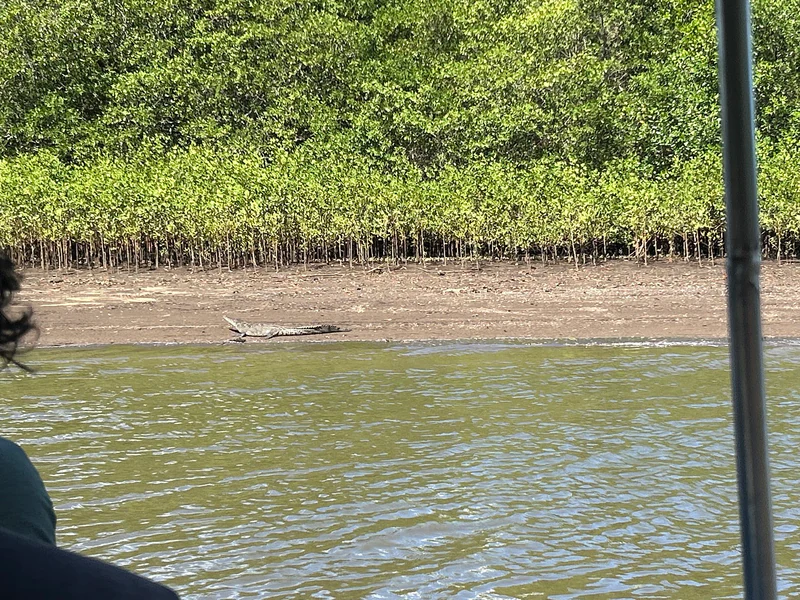
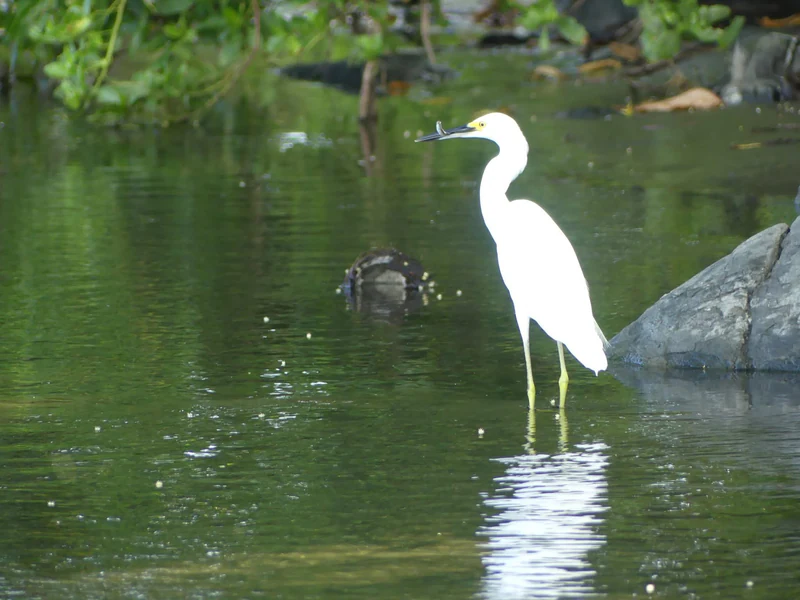
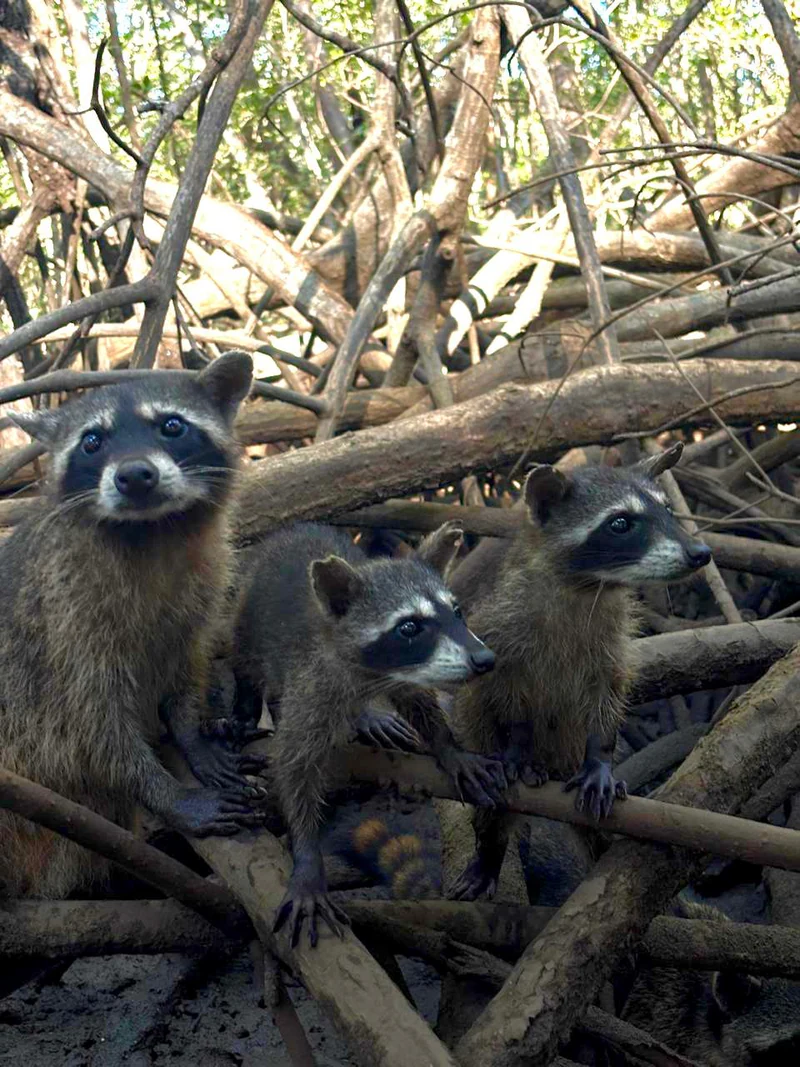
Nothing here is arranged for visitors. A raccoon walks the roots looking for crabs, a heron stands motionless over the water, an ibis flock probes the mud. The eBird hotspot for Tamarindo lists 292 bird species reported over the years. What you see depends on the tide, the season and the animals themselves, and some days are quieter than others. That uncertainty is part of the deal, and part of the reward: the first time you spot a bird on your own, before anyone points it out, you will know what we mean.
A good guide makes the difference. Most animals in a mangrove are camouflaged or still, and a trained eye finds them: the herons and egrets on the banks, the kingfishers on low branches, the mangrove crabs on the roots.
Side by side
| In the wild (estuary tour) | At a sanctuary-type zoo | |
|---|---|---|
| What you see | Animals in their own habitat, doing what they normally do | Animals that cannot be released, in enclosures |
| Certainty | Never guaranteed: depends on the tide, the season and the animals | High: the animals are there every day |
| Distance | You watch from the boat or kayak, at a respectful distance | Close views through the barriers of each enclosure |
| What you learn | How the mangrove works and how each animal lives in it | Why animals end up in captivity and how rescue works |
| Contact with animals | None | Should be none for visitors |
Can you do both?
Yes, and many visitors do. A sanctuary that follows the rules can be a good place to learn, and an outing in the wild shows you why those rules exist. Just keep the same standard everywhere: watch, do not touch, do not feed. If you find an injured or orphaned wild animal, do not pick it up or take it home; report it to SINAC instead.
See the estuary with us
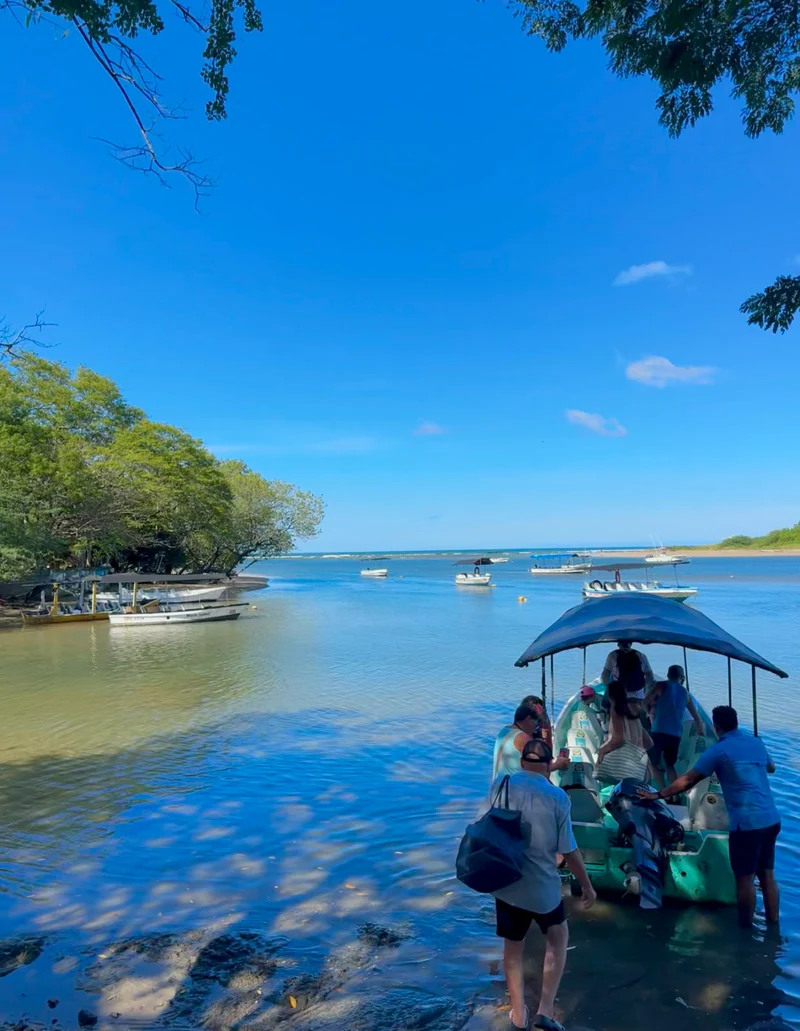
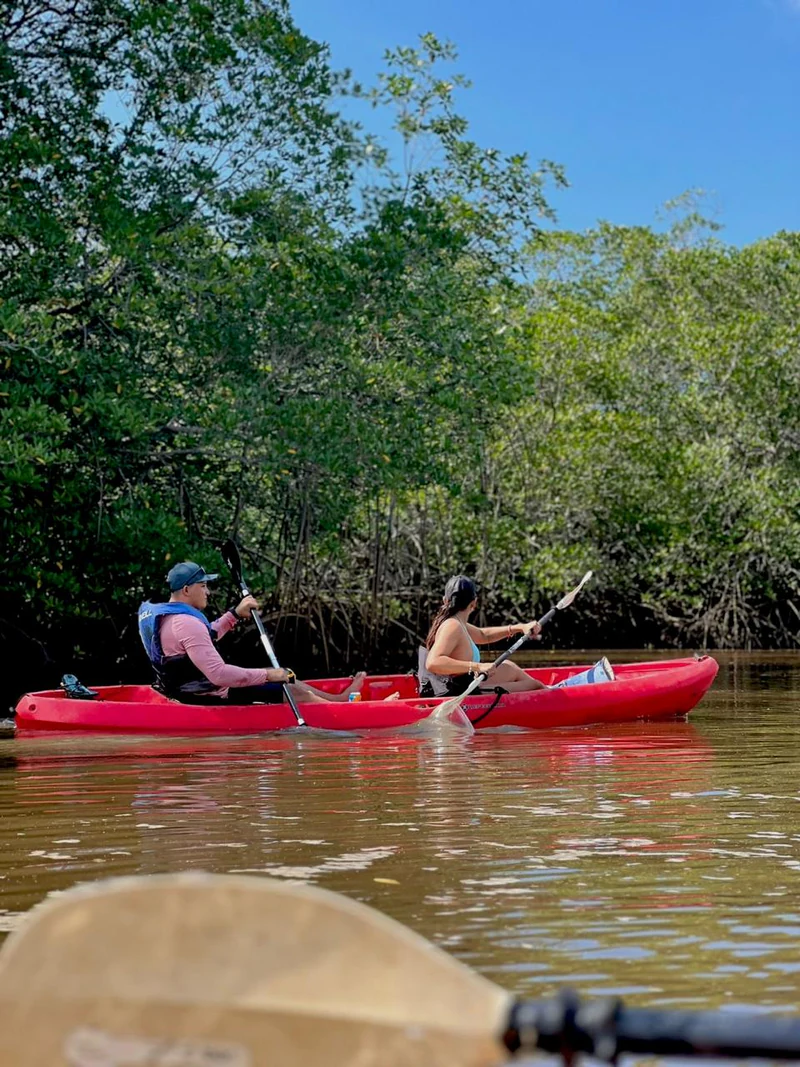
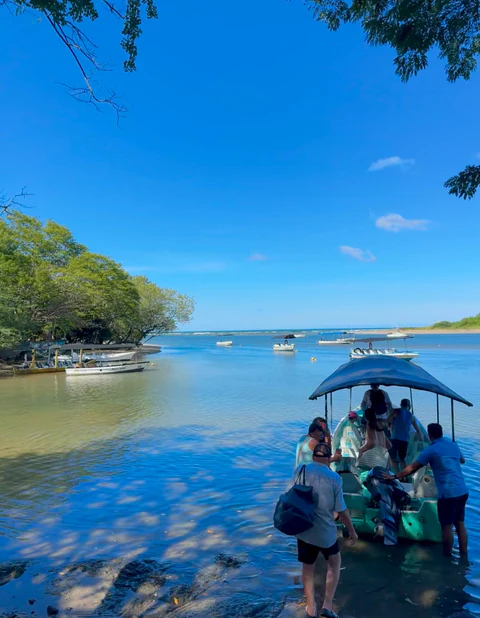
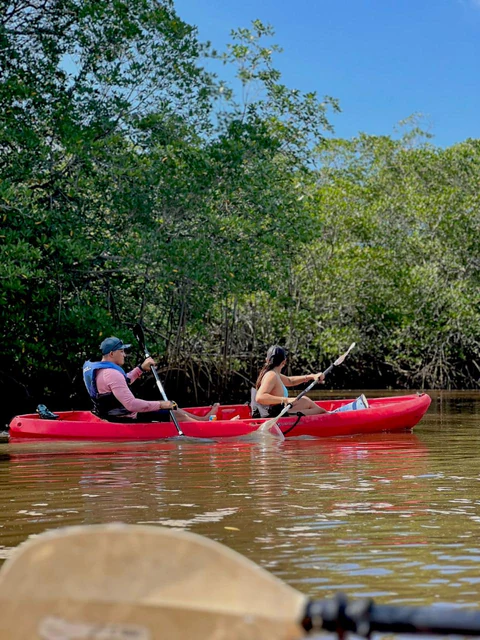
Our wildlife boat tour in the Tamarindo estuary lasts about 2 hours, with a bilingual guide and seasonal fruit; the departure time follows the tide. If you prefer to move in silence, paddle the mangrove by kayak (1.5 to 2 hours, double kayak). Animals are watched from a distance. When you are ready, book your tour.
Sources
- La Nación (3 Aug 2017): Nuevo reglamento pone en orden a zoológicos y centros de rescate
- Decree 40548-MINAE: Reglamento a la Ley de Conservación de la Vida Silvestre (PDF, CHM Costa Rica)
- Ley 7317, Ley de Conservación de la Vida Silvestre (SCIJ)
- Delfino (6 Aug 2026): Sala IV avala prohibición de alimentar patos silvestres
- Delfino (20 Apr 2021): SINAC order on selfies, feeding and breeding at a wildlife park
- Delfino (15 Jul 2026): consultation on a new wildlife regulation
- American Birding Association: Code of Birding Ethics
- SINAC: Tempisque Conservation Area
- Ramsar Sites Information Service: Tamarindo (610)
- eBird: Tamarindo hotspot (L442998)
Reviewed: November 19, 2026 · Valled Tours