Langosta and the estuary: two ends of the same town
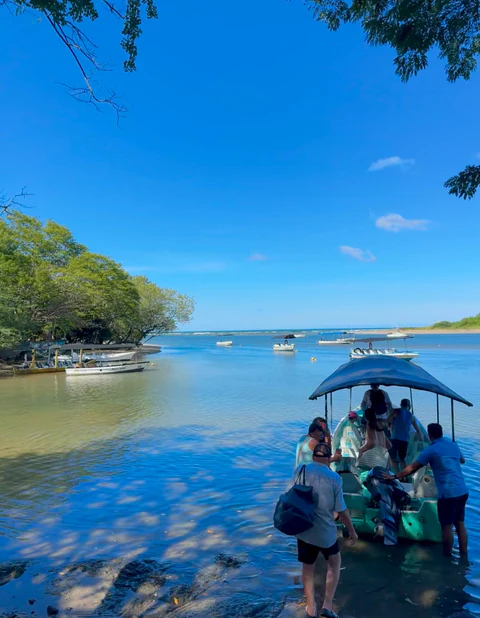
Playa Langosta sits just south of Tamarindo town. Our tours start at the opposite end, at the north end of Tamarindo beach, where the estuary meets the sea. Between the two you have the whole town, so the trip to the departure point is short: on most days it is the easiest outing you can plan from Langosta without a long drive.
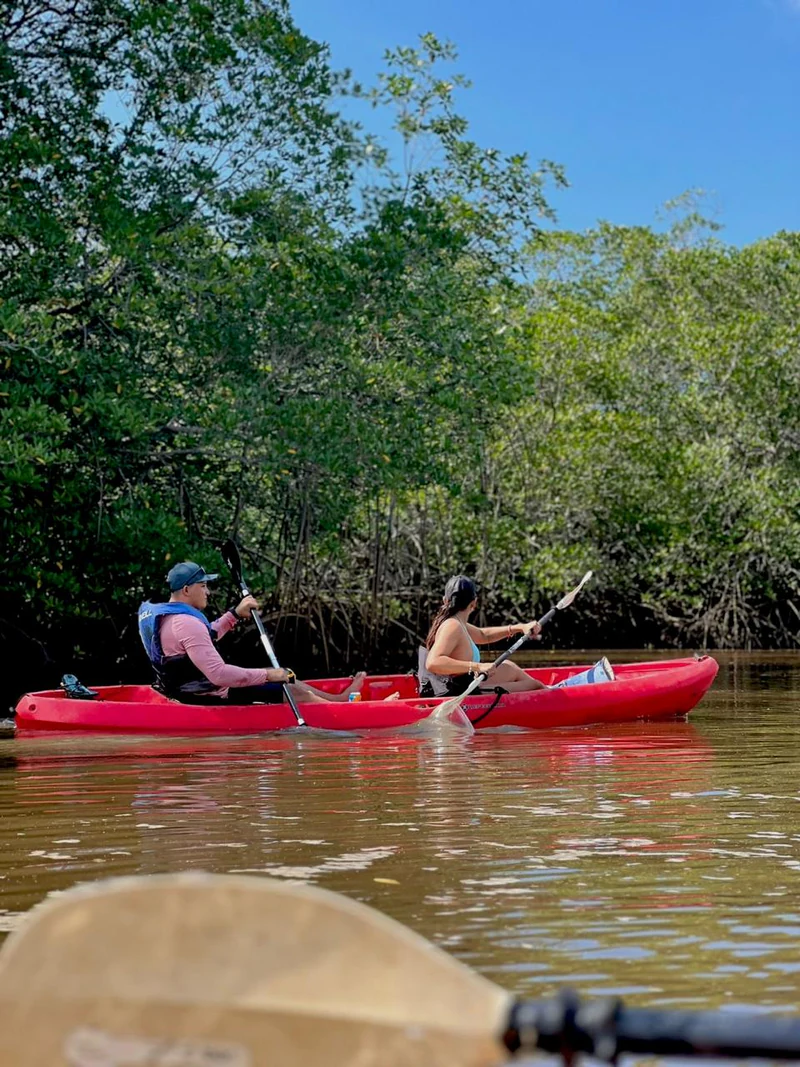
The estuary is a different world from the beach. Behind the sand there is a forest of mangrove crossed by channels, part of the Ramsar wetland of international importance «Tamarindo» (site 610), designated in 1993. Today it lies inside a marine national park managed by SINAC (Tempisque Conservation Area). Our guide to the Tamarindo wildlife refuge tells the full story.
How to get to the departure point
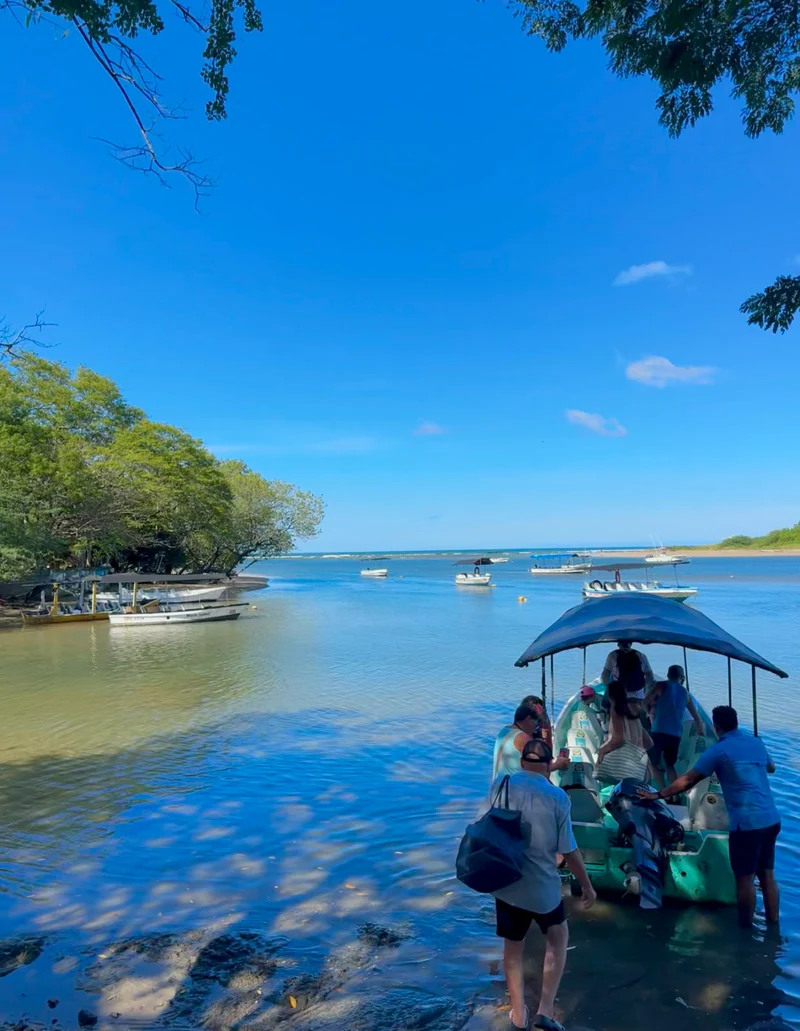
We meet in front of the park entrance booth at the Tamarindo estuary. Open the location in Waze or Google Maps and check the drive time from your place in Langosta: it depends on where you are staying and on the traffic in town.
- By car or taxi: the simplest option. Put the Waze link above in your phone before you leave.
- If you need a ride: transport is not part of the tour as we publish it. Ask us on WhatsApp at +506 7028 6364 when you book and we will tell you what we can do for your date.
- Plan to arrive a little early: the departure time is set by the tide, and we confirm it with you on WhatsApp.
When the tour leaves
The departure time follows the tide and changes from day to day. Choose your date when you book and we confirm the exact time on WhatsApp, together with the location. If you only have certain hours available during your stay in Langosta, tell us: we will check which days fit.
What you may see in the estuary
The eBird hotspot for Tamarindo, at the mouth of the estuary, lists 292 bird species reported over the years (checked on 18 November 2026). The ones birders report most often are big and easy to watch from the water:
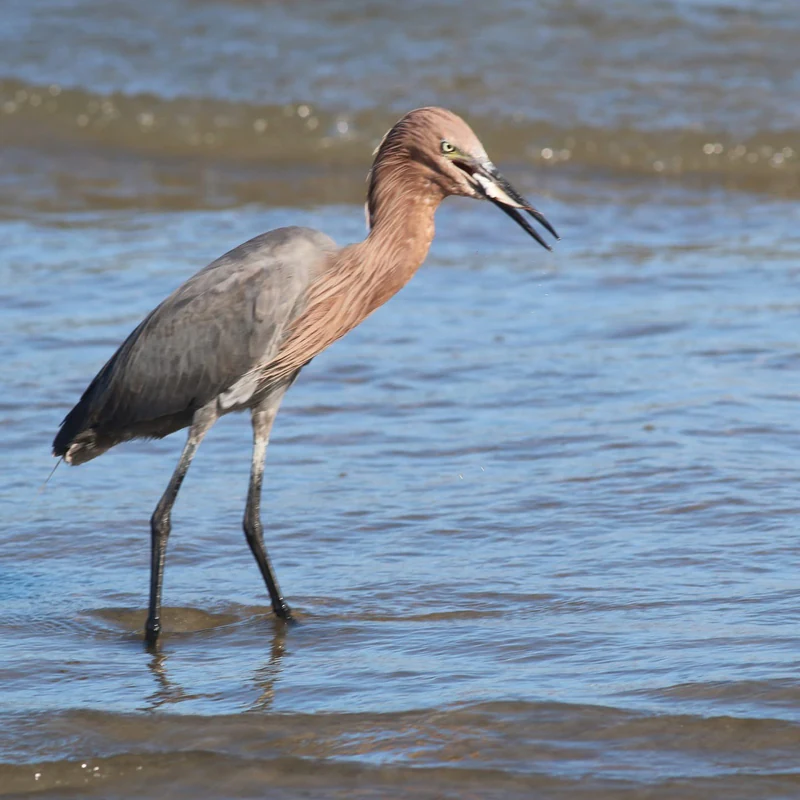
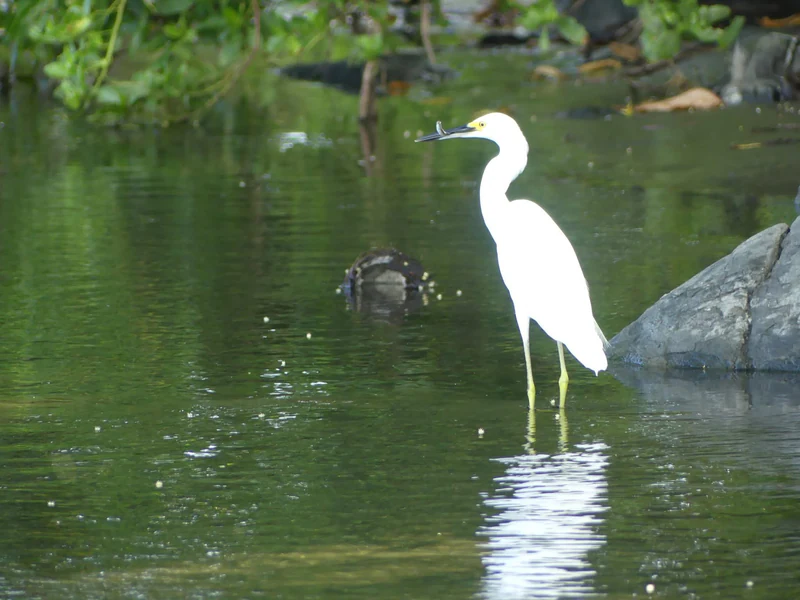
- Herons and egrets on the mud banks: the great egret and the tricolored heron are common, and the reddish egret and the green heron are frequent. See the herons and egrets guide.
- White ibises probing the mud in small groups.
- Brown pelicans and magnificent frigatebirds over the mouth of the estuary.
- Kingfishers on low branches over the channels, now and then: the five kingfishers of Tamarindo.
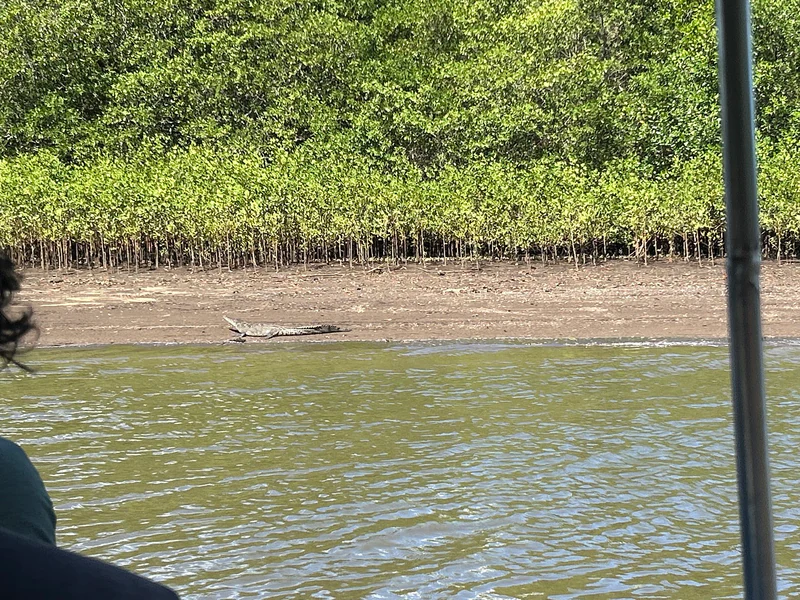
- Mammals and crabs along the roots: raccoons walk the mangrove looking for food, and crabs climb the roots.
Nothing is guaranteed. What you see depends on the tide, the season and the animals themselves, and our guide adapts the route to what is around that day.
Choose your tour
| Wildlife boat tour | Kayak wildlife tour | |
|---|---|---|
| Duration | About 2 hours | 1.5 to 2 hours |
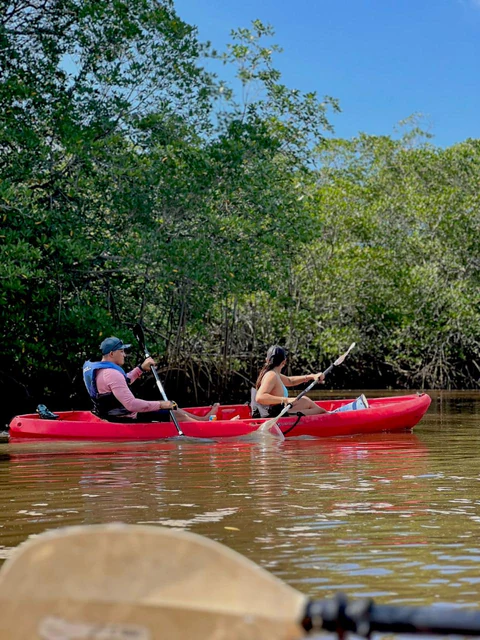
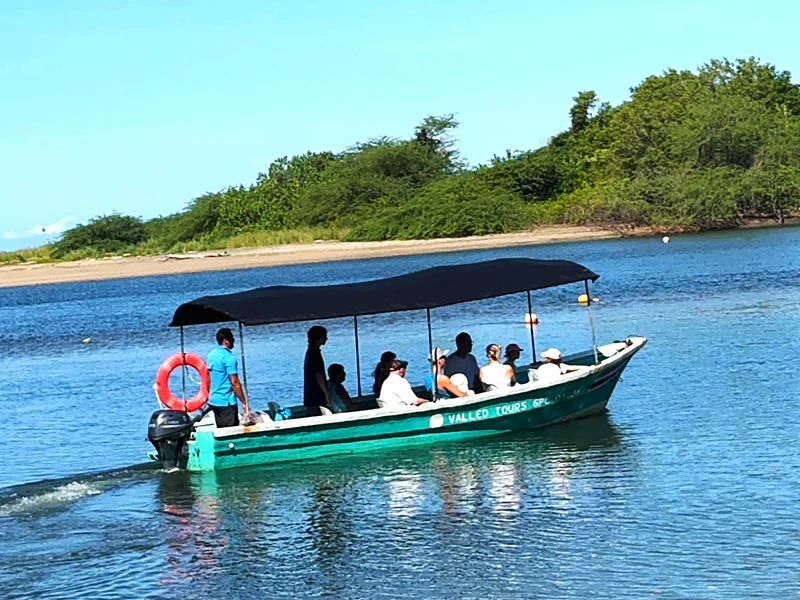
| How | By boat through the mangrove channels | In a double kayak, in silence along the mangrove edge |
| Price | US$40 per person | US$60 per person |
| Included | Bilingual guide and seasonal fruit | Bilingual guide and seasonal fruit |
To book online you pay a US$10 per person deposit; the balance is paid on the day of the tour.
More details on the wildlife boat tour in the Tamarindo estuary and on the kayak tour. If birds are your main interest, the bird watching tour in Tamarindo is the same outing with the guide focused on birds.
Why it pairs well with a stay in Langosta
A stay in Langosta is usually about the beach. The estuary tour adds something the beach does not have: a guided look at the mangrove and its wildlife, close to where you are staying. The Costa Rica Tourism Board lists Tamarindo among the main tourism centers of Guanacaste on visitcostarica.com; the estuary is the natural side of it.
Sources
- Ramsar Sites Information Service: Tamarindo (610)
- eBird: Tamarindo hotspot (L442998), checked 18 Nov 2026
- SINAC: Tempisque Conservation Area
- Costa Rica Tourism Board (ICT), visitcostarica.com: Guanacaste
Reviewed: November 19, 2026 · Valled Tours